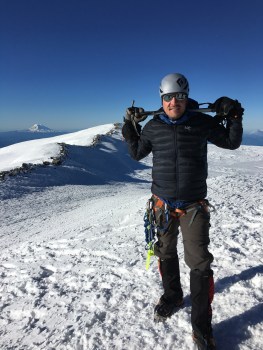
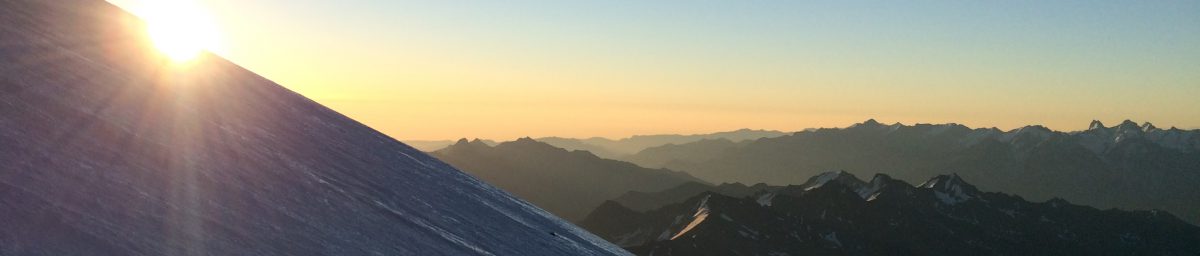


Unbelievably, it’s time to start turning my attention to the long-awaited summit attempt. The fixed lines have been set to the top and the conditions are starting to allow climbers to position themselves for the final push without getting blown off the mountain. By the time this post updates I’ll be back at basecamp making final preparations to head up the mountain one last time. I’m feeling much better as the GI and cough issues are gone and subsided respectively and my rib issue is down to a very tolerable pain level.
So what will this summit shot look like? How does it differ from the past couple rotations? What will the timing look like? And how will we know where you are and how you’re doing? This post will attempt to manage expectations while providing as much information as possible about what to expect.
First, let’s cover what this trip up will look like. As usual, it will start at basecamp (17,300’) around 2 AM. I’ll be carrying snacks for the entire trip and a few lite meals that will likely consist of oatmeal packets, simple MRE dinner pouches, and maybe some ramen noodle soup. You’ll notice the only thing those meals require is some hot water to make them edible. As far as snacks, about the only thing I’m finding palatable up at altitude are things like gummy snacks and sport fruit chews. Kept reasonably warm, these simple sugar-based snacks are small and easy to chew and swallow. There will be full meals provided at camp 2 so meals will only need to be carried for camps 3 and maybe one for camp 4.
Heading up to camp 2 involves crossing through the Khumbu Icefall between basecamp and camp 1 then crossing the Western Cwm between camps 1 and 2. If you’ve been following along you’ll recall the different challenges each of these sections present. The route through the icefall has been different every single time I’ve passed through it and I expect the same of this trip. We will be crossing horizontal ladders and climbing vertical ones. We will be traversing knife-edge blades of ice and jumping across crevasses. A few sections will require some jumarring and, even though heading up, some arm rappels. This is most people’s least favorite section as the subjective danger is the highest of the climb. A sigh of relief will be had as I complete my final climb through this section.
A quick 20-30 minute break at camp 1 (19,700’) to sit, eat, and drink will be following by crossing the wavy lower section of the Western Cwn. This includes lots of small ups and downs as we climb a few steep sections with and without ladders and cross several horizontal ones. A few leaps across some small but deep crevasses will bring us to the mostly flat by sloping upper Cwm (20,100’). This long section is usually where things start getting very hot. Layers start to come off after you cross the last horizontal ladder. Water becomes a scares resource despite being surrounded by the frozen form on three sides. After approximately two miles and 900’ vertical feet later we will reach the rock of lower camp 2. Crampons will come off as we trudge up the final 300’ over mixed rock and ice. Pulling into camp 2 we will find the supplies we cached there (sleeping bag, sleeping pad, down summit suit, extra layers, extra food, batteries for headlamps, headlamps, etc.) and find tents for the next two nights.
The food at camp 2 (21,300’) is surprisingly good and is provided to us fully cooked. Despite this the appetite will already be waning. We will do our best over the remainder of the first day and all the second to eat and rest as much as possible. Backpacks will be emptied and repacked to ensure we have what we need to head up higher.
Day three will see us on the trail to camp 3 sometime around 4:30. To help us conserve energy for higher on the mountain, porters will carry our sleeping bags and pads to camp 3. We will start off by traversing the final ¾ of a mile and gaining 900’ to the base of the bergschrund on the Lhotse Face. From here we start using our mechanical ascenders and safety carabiners to jumar our way up the 45-55 degree slope. The pace usually slows quite a bit as you try to find a pattern of stepping and breathing. This is usually foiled by coughing due to the cold, dry air but still necessary. We will pass right through the middle of lower camp 3 were virtually all other teams sleep before climbing the final 300’ to high camp three at 23,700’. Once here we will finally get to hook ourselves up to that wonderful supplemental oxygen tank at a rate of approximately .5L per minute. As before, we will spend one night here trying to rest and ingest as many calories as possible. For those keeping track, we will have gained ~6,400’ of the 11,700’ above base camp.
When we wake up, it’ll be a quick breakfast before we hit the steepest part of the climb just out of camp 3. Luckily, we will boost up to 3L of supplemental oxygen per minute. Above this steep section we will start working our way across and up the famous Yellow Band before scrambling onto the rocky Geneva Spur. It is more of a traverse at this point but we will still have to work our way up as the icy South Col finally comes into view. By the time we reach camp 4 we will be right at 26,000’ and just shy of 8,000m. Some of you will recognize this altitude as the Death Zone. This sinister name is given to the altitude at which the human body can no longer adapt to the conditions. It slowly starts shutting down and, if left here long enough, would eventually succumb to the elements. Fortunately, we will have an extra 1L of O2 per minute to help us rest as much as possible during that afternoon. We will try to down some water and food but everything at up at that altitude is difficult. Appetites are usually gone and even the swallow reflex can be elusive.
It’s doubtful we will get any sleep as we wait for sundown. The excitement and general discomfort will likely mean we just lay there in our bags as we wait for our evening departure times. By 10 PM all IMG climbers will likely be on our way up with a fresh oxygen bottle. We start with the long Triangle face – a 1,500’, fairly steep, rock and ice slope that ends at the balcony. Once at the Balcony, we are half way between camp 4 and summit. We will take a quick break as we exchange our used oxygen tanks for new ones. Each tank has an 1800L capacity which, at 3L per minute, should last around 10 hours. Climbing at around 300-400’ per minutes this gives us plenty of extra oxygen to make through each section.
Leaving the Balcony, we will continue up along the South Ridge. The time for passing is gone as the route narrows with over 5,000’ of air underneath you on both sides. There will likely be a decent path and steps stomped in the snow by previous summiteers which might make things slightly easier. Up and up we will go until we reach the South Summit. From here we have to head slightly downhill for a little more than 100’ before heading to the final challenge: the Hillary Step. This final hurdle is notorious for the traffic jams it can case. With only one fixed line, people can end up waiting long periods for their chance to gain or lose the 40’. The lines tend to be worse on the busiest days which makes me glad we will likely be some of the last folks up the mountain.
Once on top of the step, it is just a short walk and a few more feet to the 29,035’ summit. By this point it will either be getting light or the sun will already have come up (pace dependent). Usually, people spend no more than 10-15 minutes on top due to the fact that the air is only 28% as dense as it is at sea level and the temperature is still extremely cold. during which time they take their summit picture, get a sip or two of water, and maybe a small bite of any snack that may have on them. Without much time (and honestly mental capacity) for reflection, most people start down toward thicker air to begin alleviating the uncomfortable feeling symptoms exerted on their entire body.
Obviously, the trip down is faster but it is also statistically more dangerous. You have to clip around folks still headed up, you are physically exhausted beyond where most people have been in their lives, and the amount of oxygen per breath is still insanely low. The ridge is narrow and makes every step important. Most sections can be hand rappelled with a safety carabiner but even that winds a person very quickly. Once back down to the Balcony, there is another exchange of oxygen bottles trading the one that went to the top and back for the one you started with at camp 4. The decent down the Triangle Face is usually a bit more straight forward as you usually aren’t passing anymore climbers at this point.
Finally, pulling into camp 4 sometime in the morning to early afternoon you get a change to get off your feet and, if necessary, warm up. However, most climbers do not stay here as the body really can’t rest and recover. After a short time you are encouraged to keep moving downhill toward thicker air. You throw anything in your pack you may have left in the tent and start the trip all the way down the Lhotse Face to camp 2. This means passing the Geneva Spur, Yellow Band, Camp 3, and bergschrund and traversing the ¾ mile back to camp. By the time you get back to camp 2, most climbers will have been awake for over 30 hours, climbed over 3,000’, descended over 8,000’, and maybe have ingested 1,000 calories during that time. Needless to say, sleep is usually not an issue that night.
The following morning you try to hit the trail by 6AM on your way back down to base camp. You cross the Western Cwm and descend the icefall for the last time. Making it to crampon point at the base of the icefalls means you’ve passed the subject and object dangers of the climb and are officially finished. There is a short 30 minute walk back to base camp over a mostly rocky trail that I’m sure will feel strange as one can finally start to let their guard down.
That afternoon and evening is celebration in camp that few climbers have the energy for but all greatly appreciate. Most of us will spend time packing up our bags and tents, making calls to family and friends, and sleeping intensely in the relatively thick air. By the next morning most of us will depart for Lukla via foot or helicopter to starting making our way back to our waiting lives.
It’s at some point that day or the next that I expect to be able to make my next blog post. That means it’ll be over a week before I’m able to come back and detail everything that happened up high – that is, everything I haven’t detailed in this post. However, I will make every attempt to keep my Garmin charged and functioning while I’m on this final push. That being said, the extreme cold we encounter at and above camp 4 wreaks havoc on electronics and batteries. Even if I leave camp 4 with a full charge, the inReach may not even make it to the summit, let alone back down (it has to have line of site to the sky so it rides on my backpack). I’ll check it at the balcony and, if I make it, again at the summit to see if it’s still functioning. If it’s dead I’ll try to warm it up and get it working again. However, my first priority is climbing. If you’re following along at home that day and the dot doesn’t seem to be moving PLEASE PLEASE PLEASE do not panic or freak out. Odds are that is simply ran out of juice or even came unclipped from my bag. When I get back to camp 4 I’ll warm or recharge it and send an update message (these only post to my Facebook page).
Given that the weather is unpredictable, a deviation from this plan could occur at any time. I’ll post an update from my inReach to my Facebook page if anything big changes. My apologies for not being able to post directly to my blog page from the inReach.
That pretty much covers everything I expect to encounter over the next 7-10 days. Keep an eye on the tracker page, my Facebook page, and the IMG blog (mountainguides.com) for more information and updates over that time. As always, thanks again for your encouragement and support over the past month and a half and especially over the next week as I make my way toward the top of the world!
Cheers,
-Wes

 Up with Wes
Praying for you all the way. God speed.
LikeLike
Wes, thanks for the very informative blog..you are very brave! You are in my thoughts and prayers always! Love you!
LikeLike
Godspeed my friend!
LikeLike
Good Luck Wes! Our Prayers are with you. Do you have a flag or something that you are going to leave at the summit? I hear its the thing to do up there. 🙂
LikeLike
Wes, good luck buddy. You’ve worked and trained so hard for this opportunity. I’ve got faith that if the conditions are right you’ll make a successful summit. Please know that you carry the thoughts and prayers of all your family and friends with you to the top of the world. God be with you every step of the way.
LikeLike
Good luck Wes, I’m cheering you on and have outmost confidence that you will get to the summit successfully. I truly believe that your dedication and hard work pays off. Looking forward to seeing you back in Seattle and hearing more about this adventure of a lifetime. Sending positive thoughts and wishes. Stay warm and keep your mind on that goal 🙂
LikeLike
Good Luck Wes!!! Keeping you in our prayers! I look forward to your next post.
LikeLike
Wes – we are praying for you every step of the way as you mount (pun intended) this challenge! Praying for safety, stamina, healing, and safety (yep, I know I already said that but when moms repeat things, one needs to pay attention)! We will look forward to seeing you and celebrating with you your trip to the top of the world!
LikeLike