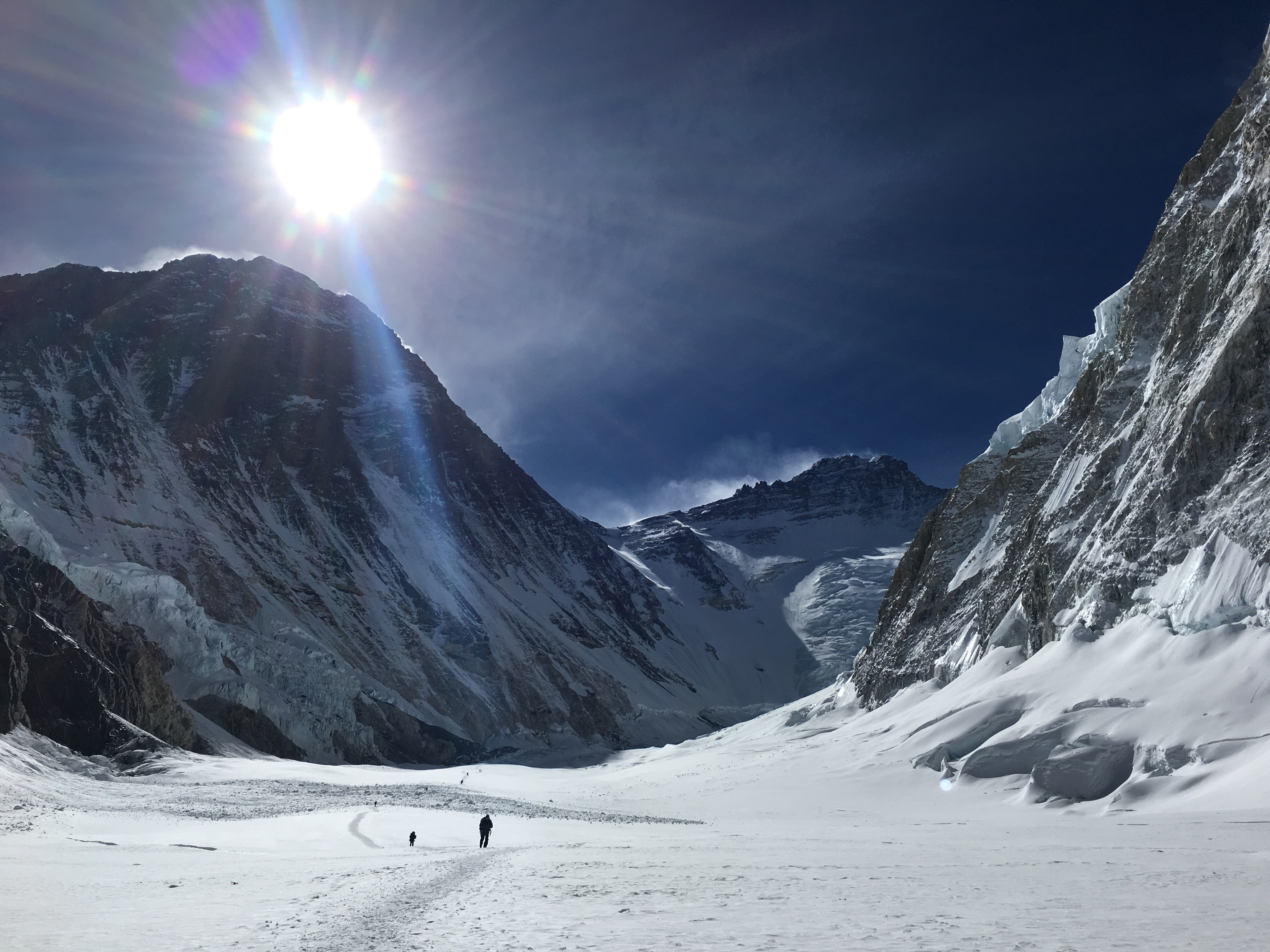
A quickish note about the route and timing

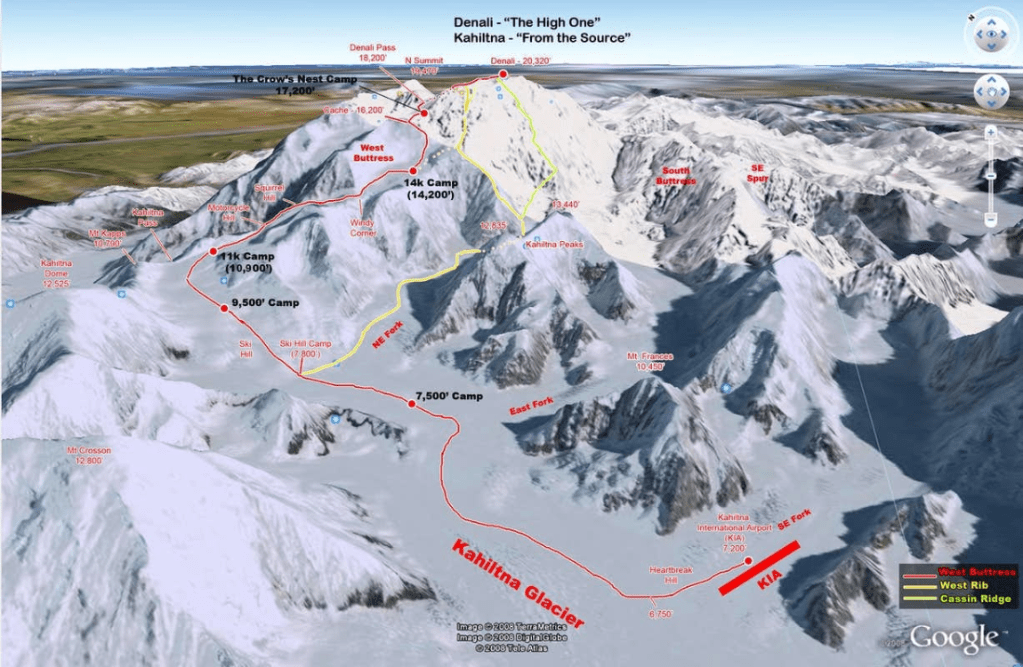
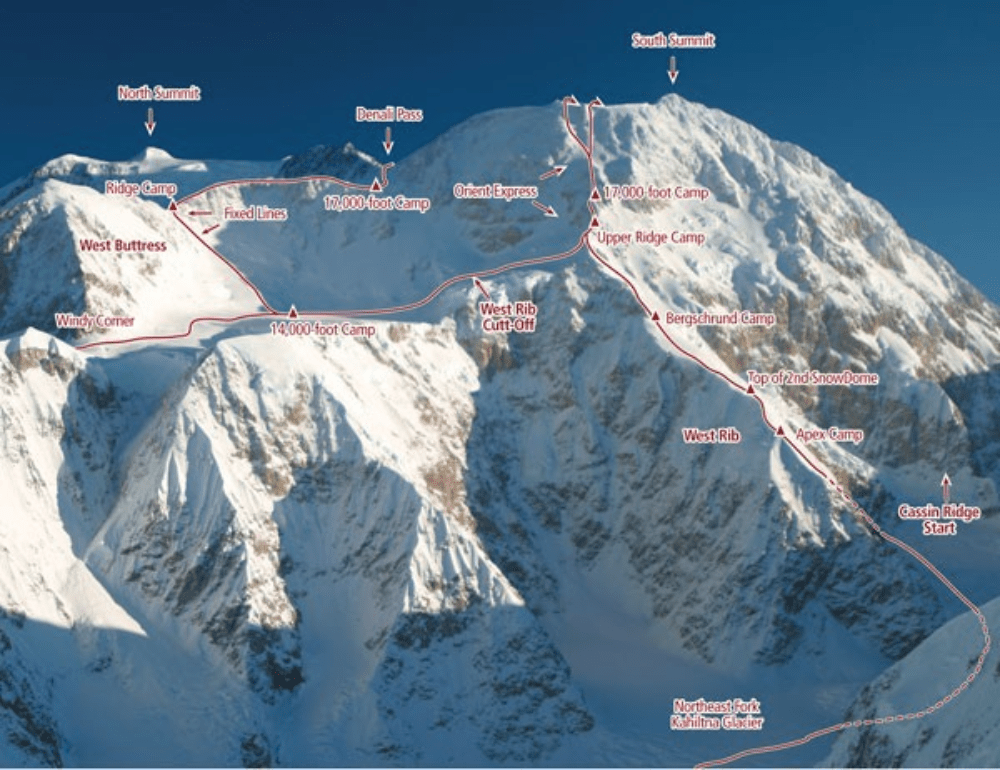
After my last post, a few folks correctly pointed out that some imagery and a more detailed itinerary would help make sense of the tracking map. Thanks for the feedback and here ya go:

We will fly onto the glacier at 7,200′ and, with about 125 pounds split between a pack and a sled, will start with a downhill ski to around 6,800′ before turning the corner and heading up to the base of “Ski Hill.” Those ~5.5 miles will put us at about 7,800′ after day one. The next day will see us getting up to 9,500′ and then up to about 11,000′ on the third day. From there, we will likely do a carry to the 14,000′ camp where we will cache about 70 pounds of gear and food before skiing/boarding back to the 11,000′ foot camp for another night. The next day will be a move to 14,000′ with the rest of our gear. This carry-then-move strategy helps break up the weight on a larger vertical move and gives us another night to acclimate.

From there, we will spend a day recovering at 14,000′ before a recon day near the base of the Messner Couloir. This will get us over 15,000′ and allow us to scout conditions for a potential ski/board descent down one of the most iconic lines in North America. The movement also gets our bodies adjusting to the decreasing partial pressure of oxygen. At 16,000′, there is only about 50% of the oxygen that you get at sea level. Following this outing, we will have another rest day at the 14,000′ camp where we will be sorting and packing gear for our summit shot when the weather allows.

The next 24-36 hour weather window will be our first chance at a summit bid. This is where our route will diverge from the standard Western Buttress Route. Likely starting around midnight, we will take the cutoff to the Upper West Rib and follow a more technical route that ascends more directly to the summit. This route can be good snowy conditions that allow “easy” steps to be kicked in, icy conditions that require ice screws and snow pickets for running protection, or rocky conditions that will see us scrambling up with “stopper” protection placed in constrictions in said rock. We will be attempting to go straight to the summit from 14,000′. This will allow us to travel lighter and faster than we would if we were planning for a high camp but will make for a very long day up to the summit at 20,300′.

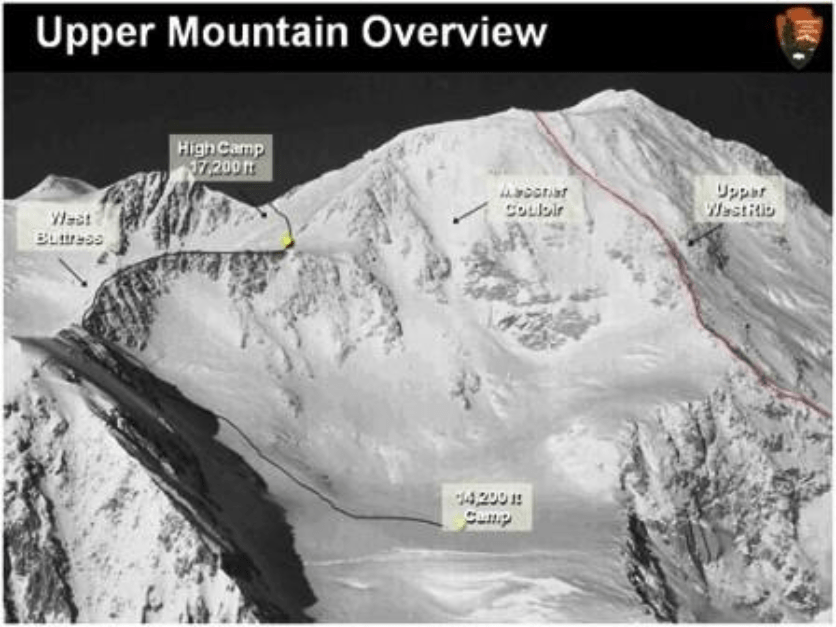
If we are lucky with conditions, strength, and timing, we then get to look down at what some people call the best ski/board descent of their lives. The Messner Couloir is a gorgeous, 4,000′ narrowing chute that dumps out just above the 14,000′ camp as seen below. It gets fairly steep (up to 50 degrees) and can be dicey if the conditions aren’t ideal. This is why our recon day is so important and why we will only take this route if we feel it can be done safely. If we are lucky, we will get to “send” this line and save hours off our descent. If the mountain determines otherwise, we will be descending the Western Buttress while we stare longingly over at the Messner.

The Messner Couloir (center) with the Upper West Rib in red on the right

Back at 14,000′, we will get some much needed sleep and rest. The next day we will get up early, break camp, and get ready for another fun day. This is where we will be the envy of the mountain as we quickly ski/board all the way down to the base of Heartbreak Hill at 6,800′. From there is a quick one mile skin up to the airfield. It shouldn’t take more than two hours by ski whereas those on foot might spend an entire day covering the same ground. It also spreads our weight out over a larger area which decreases the chances of falling through a snow bridge. Once we are back at the airfield we will load up on the next plane and be on our way to our first shower and real meal in 2-3 weeks.

Of course, weather is a huge part of any Denali climb. From even getting onto the glacier, to being stuck in white out blizzards at every camp, we could be forced into a waiting situation at any point for days on end. Those days aren’t quite as fun or scenic, but we’ve got a good team and a cook tent where we can all gather in a circle playing cards and talking.

Ok, that’s about all the details you’ll need to know to follow the bouncing dot on the “Tracking Map” page. Cheers to all and next update from Alaska as we get ready to fly onto the glacier.

Back at the Up and Up

Two years ago, I sat down and wrote a blog post having no idea what the path back to the mountains would look like. I was in North Carolina experiencing a new part of the country and an entirely different culture. It’s not fair to say it didn’t agree with me; there were many aspects that enhanced my perspective on the world and brought me understanding that I likely wouldn’t have gained otherwise. However, I found myself longing to be back somewhere that I not only connected with, but also brought me peace.

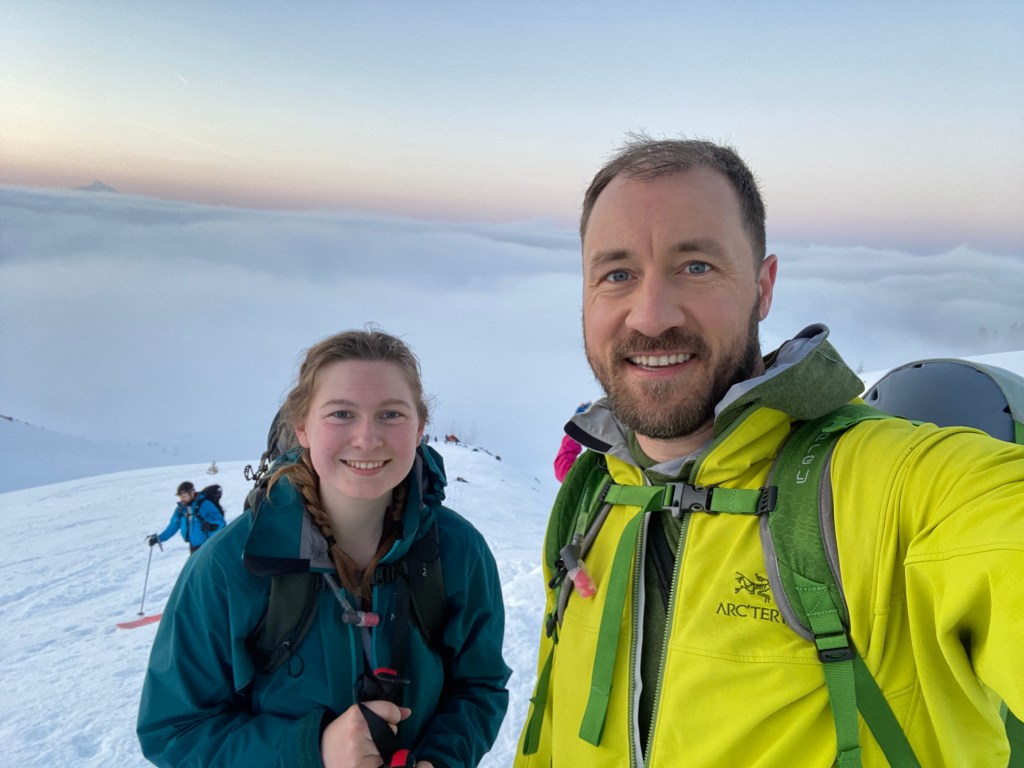
Jenna and I on our way up St. Helens

In what I can only say was a very fortunate series of events, I’ve found myself back in the Pacific Northwest, this time in Portland, Oregon. I’ve been here for over a year now and it’s fair to say that, apart from some almost comical injuries, I’ve found the peace I was looking for.  Fortunately, the setbacks were not enough to keep my fitness progress stalled and I’ve been able to get out and enjoy the surrounding high places. So much so that I’m fortunate to be in a position to join some of the finest group of climbers I’ve had the pleasure of meeting on a journey, hopefully, to the top of Alaska’s Denali starting just 10 days from now.

Denali Team

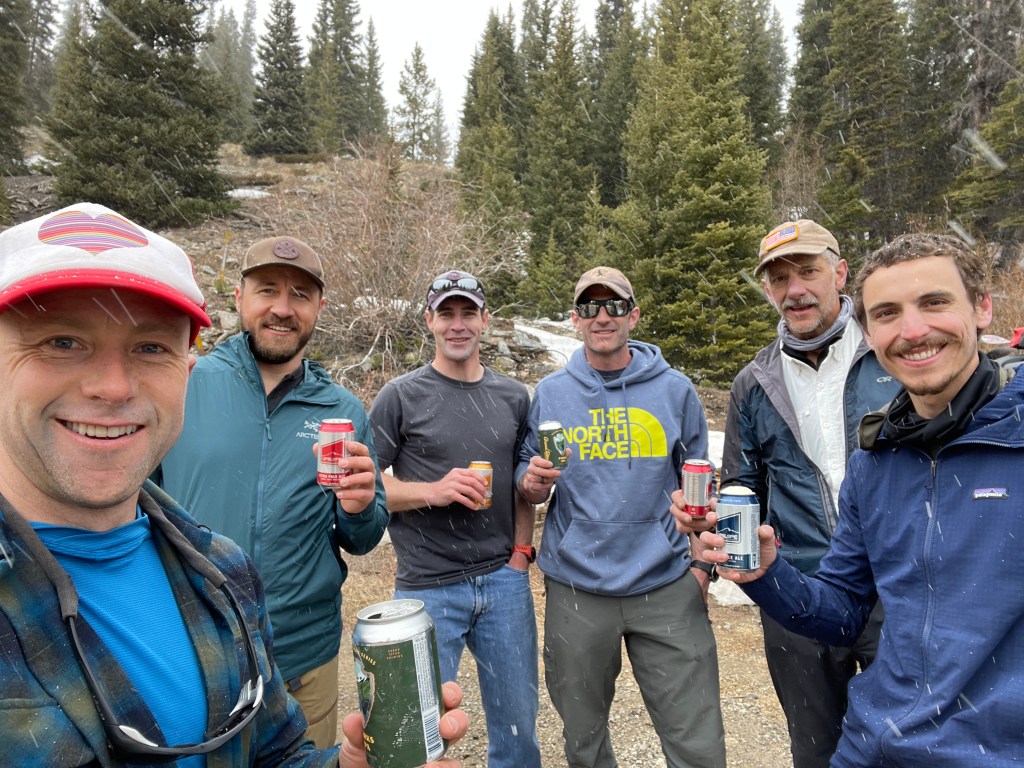
The team is comprised of five current and former Air Force members and a professional videographer. We had a chance to climb together earlier this month in Colorado and had a blast practicing some technical skills and getting to know each other better. Before that, all we could say is everyone knew someone; no one knew everyone. Now with personalities clicking and the stoke growing, we are ready for what looks to be one of the more technical climbs and descents I’ve done in a long while.

We fly onto the glacier 29 May and will be attempting the Upper West Rib with a ski/board descent of the Messner Couloir (conditions permitting). We will follow the standard Western Buttress route to the 14,000’ camp before branching out for our summit attempt. This includes landing on the glacier at 7,200’ followed by camps at 7,800’, 9,500’, and 11,000’. If conditions support it, our current plan is to make a summit attempt direct from 14,000’ to 20,310’ and back down in one push. This will save us several days on the mountain and allow us to make the attempt in a narrower weather window instead of having to establish a 17,000’ camp via the normal route. If the conditions and weather conspire against us, we always have the option to join the rest of the climbers up the Western Buttress.

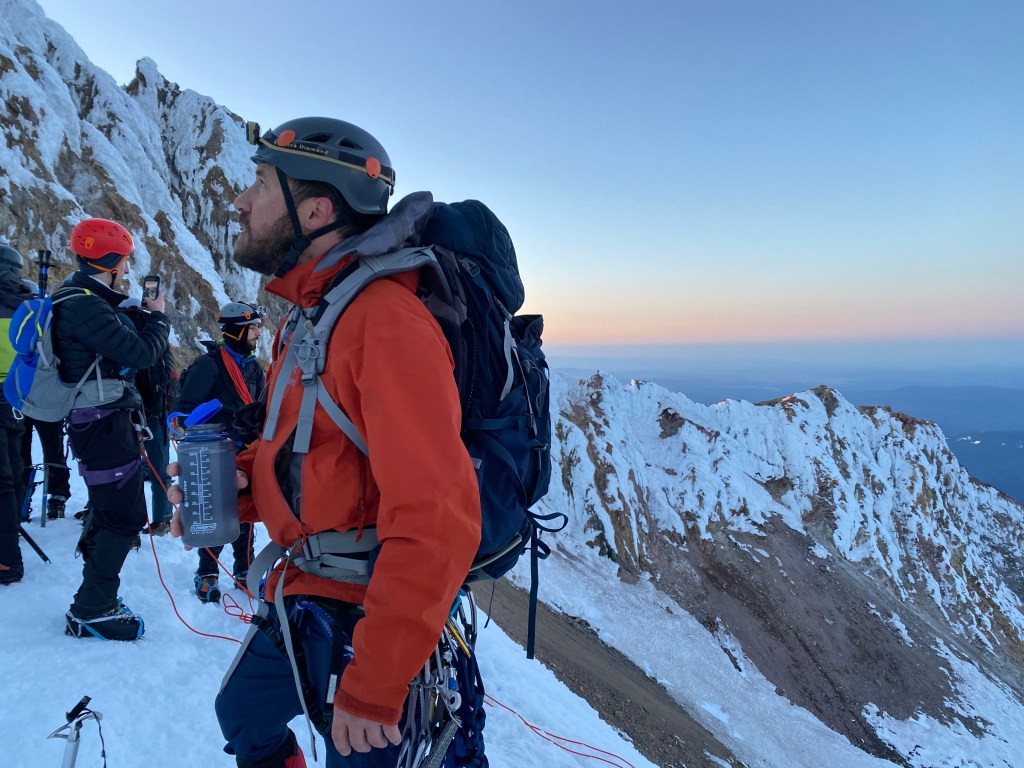
Heading and looking up Mt Hood

It probably won’t surprise you to learn there is virtually no cell or internet connection up there and our only communication will be via a satellite texting device. As such, I won’t be able to give anecdotes about the experience until I get back. I will, however, try to keep the GPS tracker going when we are on the move and will have my girlfriend post to my social media letting everyone know what is going on.

If you’re curious and want to know more about the climb, feel free to reach out before I head out on 28 May. Otherwise, I’ll make a post when I get back and let you all know how it turns out.

-Wes

Never say “Never Again”

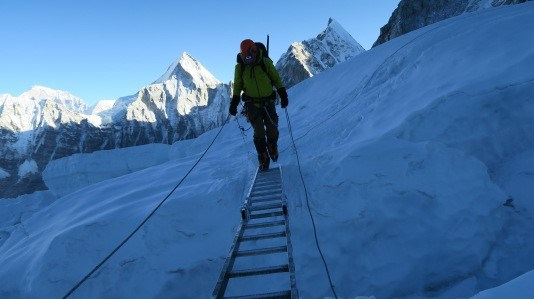
Durham HouseIts coming up on two years since I left for Nepal and not a day goes by where I don’t think about some portion of that trip and climb. The people, the environment, the views, the pain. There were moments of intense fear and awareness while passing through the Khumbu Ice Fall. There were moments of peace as I watched the sun rise and fall over some of the most stunning mountains I have ever seen. I spent sleepless nights recoiling from the pain of coughing with a broken rib and severe respiratory infection. I spent days reading books and sharing stories with some of the best people I’ve ever met. It was only two months but it contained a lifetime’s worth of living.

IcefallI would not change a single decision made during that trip as I am here now to write this blog. A good mountaineering decision, much with all good life decisions, should never be second guessed. We prepare ourselves, continually evaluate the situation and circumstances, and do the best we can with the information at hand. We do this so we can continue to do the things we love. The passion, effort, dreaming, and excitement that go into our pursuits are what make them worth pursuing.

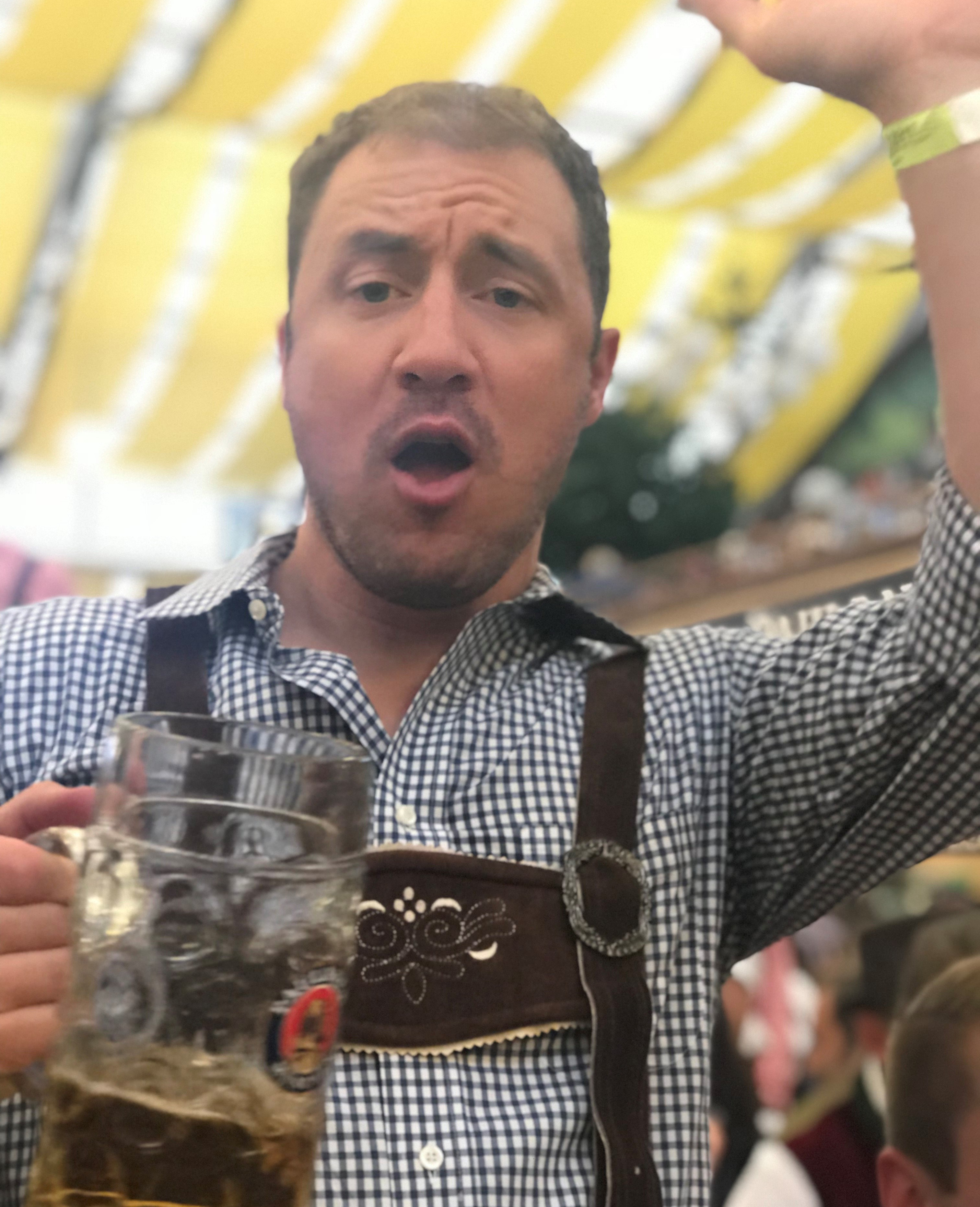
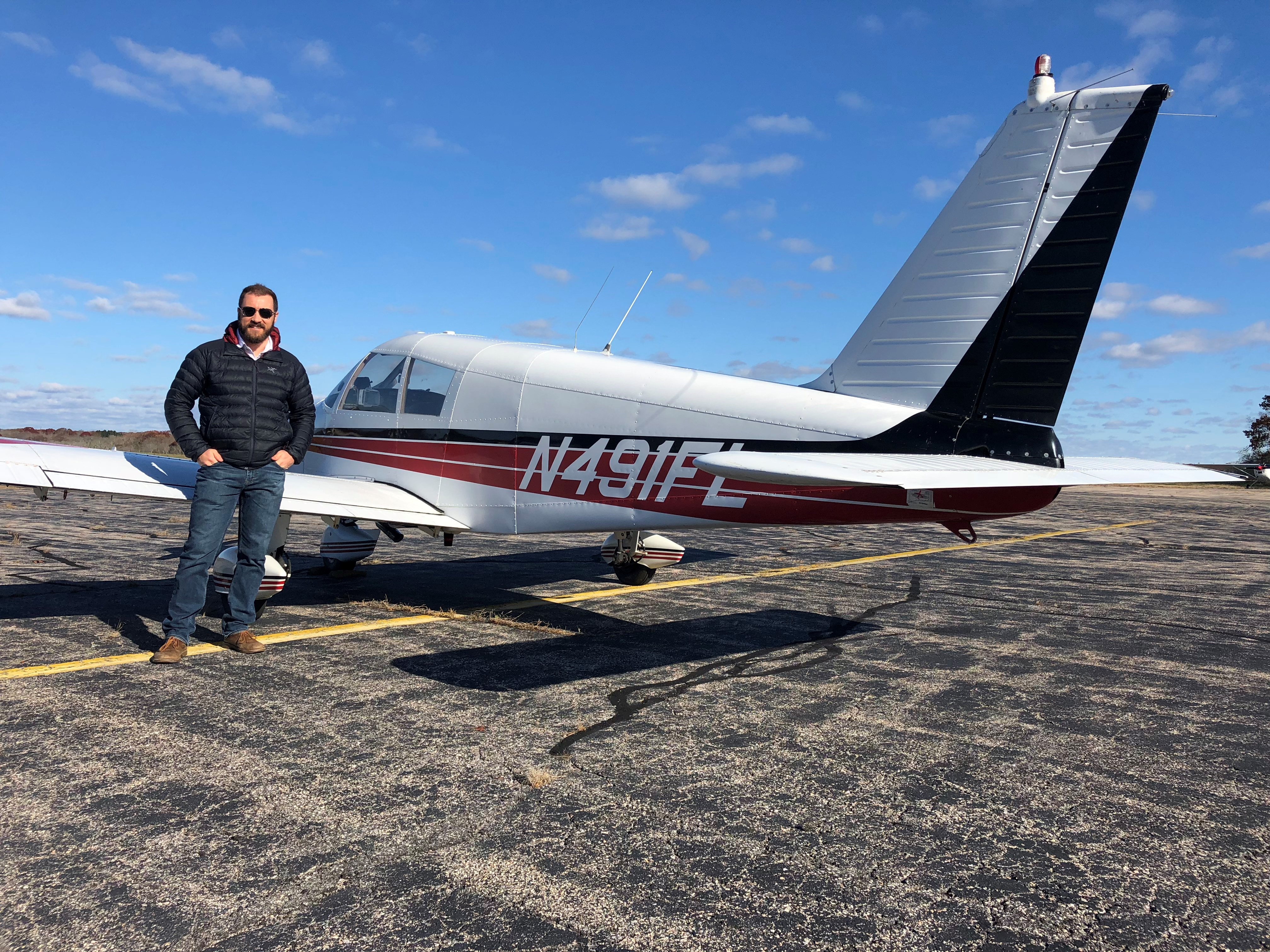
OktoberfestOver the past two years I’ve given myself the time to enjoy some of my other passions. I’ve gotten back into flying, something inspired by my grandfather. The freedom of the air can be as powerful as the freedom of the hills. I also tended to a garden for the first time and enjoyed some mild success. Not surprisingly, the literal fruits of my labor quite enhanced the flavor of the peaches, okra, corn, and tomatoes I was able to harvest. I’ve also enjoyed mountain biking, rock and ice climbing, and have taken several trips who’s main purpose did not include climbing (but also some climbing).

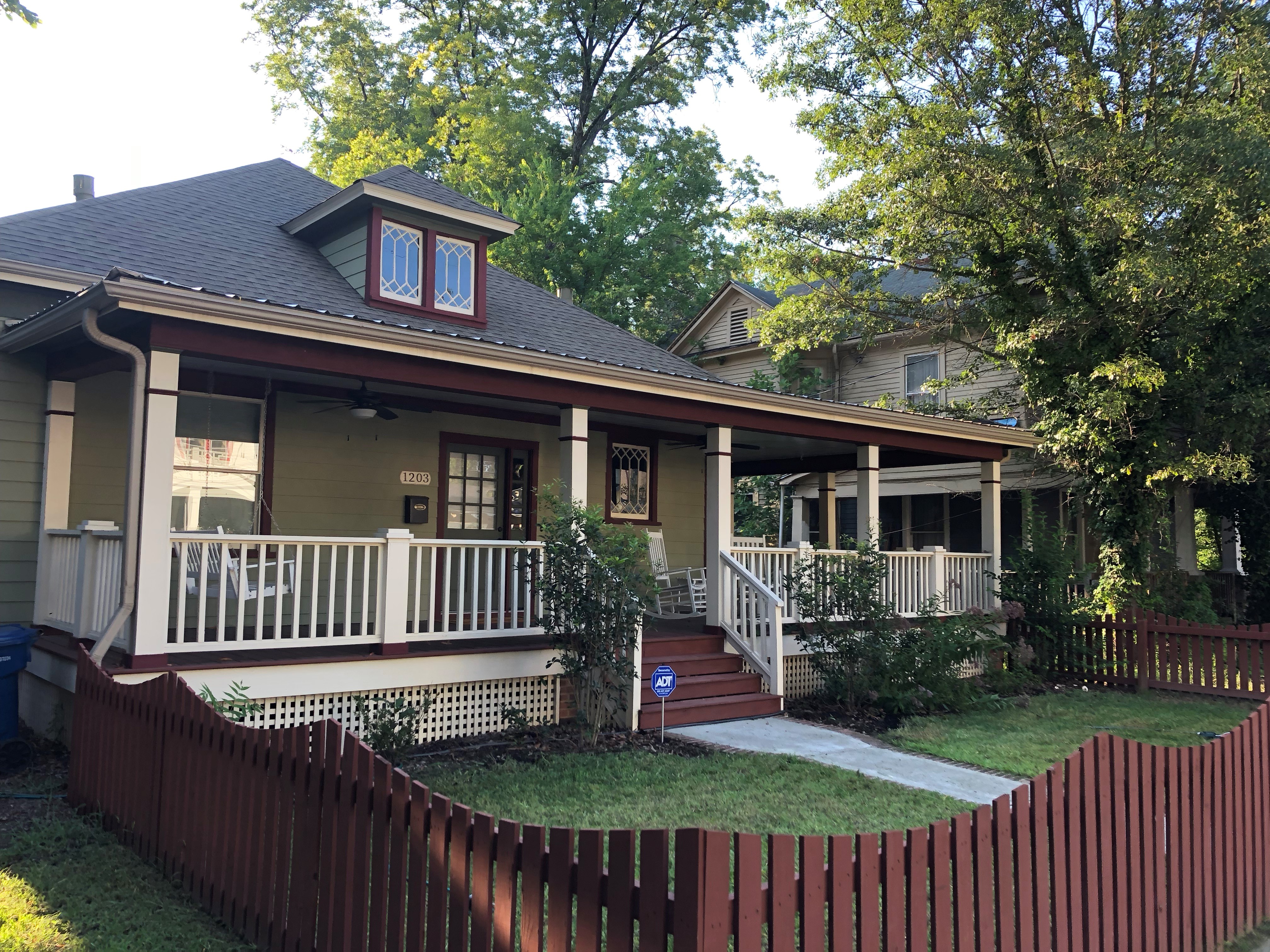
Its been a good two years filled with personal, pickupprofessional, and emotional growth. I relocated from Seattle, Washington to Durham, North Carolina. I bought a now 99 year-old house that I hope to be in when it turns 100. The floors creek and the walls are no longer square, but the “character” continues to grow. It’s a bit like the history of Durham and I feel a good connection to the city living where I do. Durham is a city of arcs. Of high highs and low lows. Of progressive times, of hard times, of stalled times, of resurgent times. Its a great metaphor for life. Time goes on. Things change while still looking familiar.

When I look in the mirror I see the same person but the lens seems to change. Two years ago I thought I had experienced enough on Mount Everest, and in many ways I did. All you have to do is read my previous blog entries to understand. However, while the mountain still looks the same, I’m wondering if I’m seeing it in a different way now. The draw is still there but it feels different than before. Its hard to explain and even if I could I wonder if the words would be wasted because you already know the feeling. I think maybe we’ve all been there in our own way. We’ve come up short on something we’ve worked so hard to achieve. We know the effort we put in and know that through external forces we just couldn’t get there.

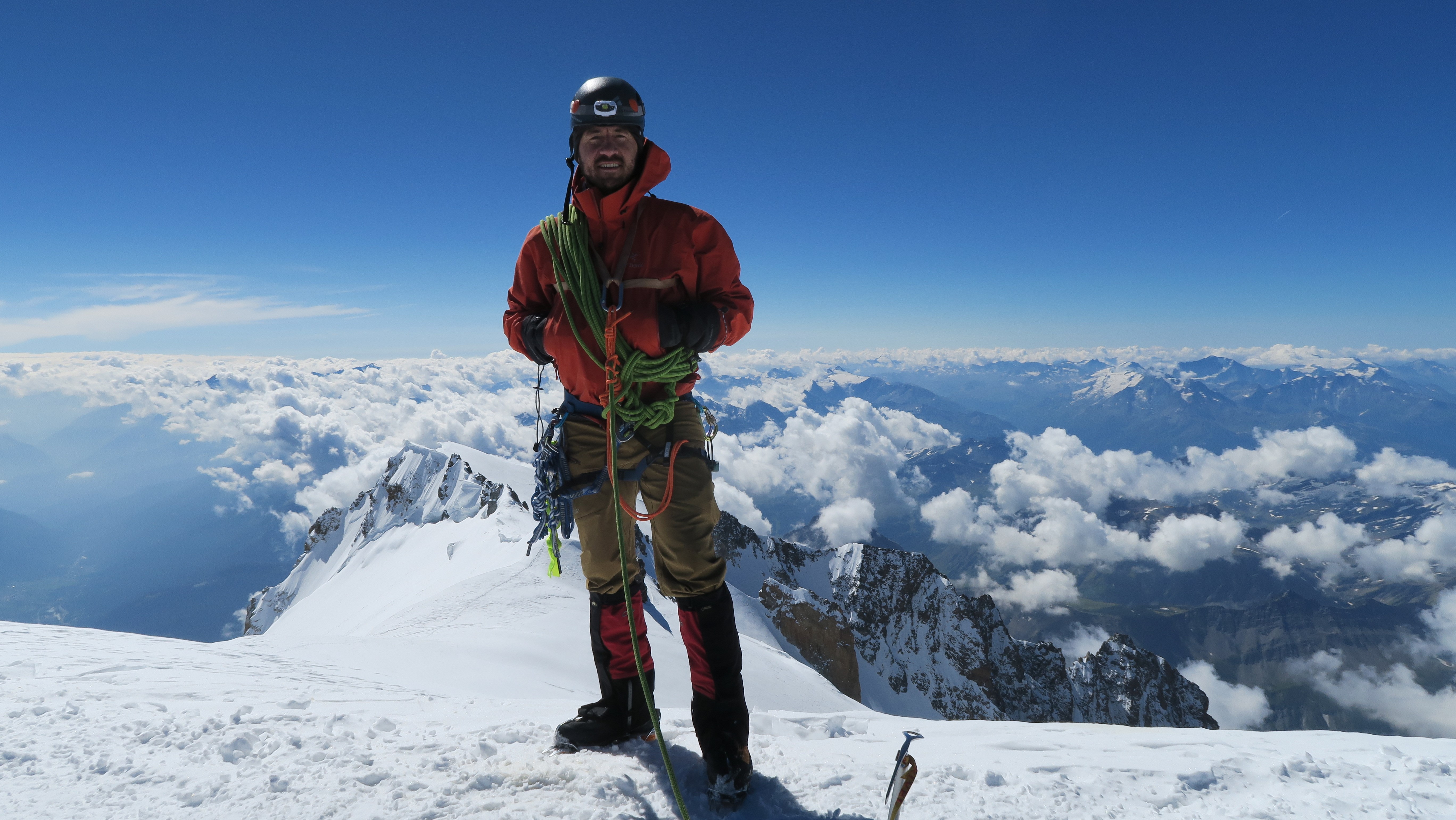
Mont BlancBut that doesn’t keep up down. Sometimes the experience causes up to rethink our priorities or motivation. Sometimes we change or modify our goal. Sometimes we become even more driven and decide to reach even further than before letting the lessons of prior experiences focus our efforts anew. I can’t call it validation, vindication, confirmation, or any word that would imply you are trying to prove yourself to anyone else. It comes from inside. Perhaps its best said in one of my favorite quotes. If you replace the mountaineering concept with anything worthwhile that you’ve ever wanted to achieve I think you will agree:

You cannot stay on the summit forever; you have to come down again. So why bother in the first place? Just this: What is above knows what is below, but what is below does not know what is above. One climbs, one sees. One descends, one sees no longer, but one has seen. There is an art of conducting oneself in the lower regions by the memory of what one saw higher up.

-René Daumal

This does not mean that I am going back. Nor does it mean I’m not. But the idea is there and I can no longer honestly say: Never Again.


“Almost Everest”, coming to a brewery near you

IMG_1503Friends and followers (especially in Colorado), on Monday, 25 September I’ll be giving a talk entitled “Almost Everest” at the Intrepid Sojourner Beer Project in Denver, CO. The talk will focus around my recent experiences on Everest and how it figures into the life of a mountaineer and adventurer. The show starts around 7 PM and there will be time for Q&A at the end. Sign up for free here and get 25% off your bar tab:

http://www.atlasobscura.com/e…/speaker-series-almost-everest

I’ll be there around 5:30 the day of the talk for anyone who’d like to stop by early and catch up. Hope to see as many of you there as can make it.

Easy choice in a tough situation

I hate to be writing this from Kathmandu when the rest of my team is at the South Col getting ready for their summit shot but sometimes mountaineering (much as in life) doesn’t give us the fairy tale ending we want. However, it does afford us the chance to make smart decisions when the opportunity presents itself and live to climb another day.

Yesterday morning as I approached the base of the Lhotse Face on my way to camp 3 I was in one of those positions that every good and smart climb should have already visualized a hundred times over. I was coughing hard and deep, I was at a slower pace than I’d been holding the entire trip, and even at that slow pace I could hardly catch my breath. Something was wrong with my lungs and it wasn’t going to get better by continuing up. Despite legs that still felt like they could carry me to the moon, I knew I had to turn around there at 22,300’ before a bad situation got even worse.

Three days prior on my trip to camp 2 I knew something was off. I had to adapt a strange breathing rhythm just to finish the trip across the Cwm. The very deep, productive cough started shortly after I arrived at camp 2. It was so intense that my already injured rib was exasperated and another one popped to join the other. If that weren’t enough my sinus started producing again at an awful rate. Between blowing my nose and coughing things out of my lungs, I had a terribly unrestful three nights at camp 2.

Despite this, my appetite remained and I continued to eat and prep for the move up the mountain like nothing was wrong. In fact, one of the guides seemed surprised when the night before the move to camp 3 I was packing and prepping like everyone else. He asked if I was planning to head up to which I responded “that’s what we came here to do right?” I didn’t mean to sound like a dumb climber but I wasn’t ready to make the call until I heard and felt my body react to movement. Fortunately or unfortunately, that call came quickly the next morning.

I made it back to camp to within the hour and gathered all my remaining gear before starting down to base camp at 7:30 AM. The final trip through the ice fall was warmer and more intense than any previous trip with the added physical weight of all the gear that had already been brought up and the mental weight of watching the summit fade away in the rear view. By the time I made it to the Base Camp ER at 11:00 I was physically spent and getting weaker by the minute with the lung issue. The docs couldn’t tell whether it was HAPE (High Altitude Pulmonary Edema) or pneumonia but recognized that breathing was getting harder and harder even at that lower altitude. They recommended an immediate helicopter evacuation to the hospital in Kathmandu.

It took a little working by the staff back at IMG Base Camp but the helicopter was ordered for 4 PM. In the mean time, I packed up my tent and closed out a few affairs with my Sherpa. With two duffels and a day pack fully loaded it was time to head to the helipad. By this point I couldn’t walk up 10’ without taking break to catch my breath. It was becoming painfully evident (yes pun intended) that I had made the right call. If I felt like this at base camp (17,300’), at camp 3 (23,700’) I likely would be getting strapped into a sled on oxygen getting lowered to camp 2 in a sled on my way to a heli evac. As it was, I was still getting on a helicopter but under my own power and without counting on those around me to save my life.

The helicopter flight to Lukla was a quick 12 minutes and, as a pilot, an amazing way to end my time in the valley. After a short stop and a quick visit to the doc there we took off again, this time bound for Kathmandu. This flight is a bit longer (55 minutes) and not quite as scenic in comparison to flying around some of the highest mountains in the world.

There was already an ambulance waiting for me by the time we landed and I was taken directly to the hospital. Vitals were improving by this point if for no other reason than the 4,500’ elevation. I’ll spare a few details with the hospital visit but the short of it is that I was admitted and stayed the night under observation. The X-ray didn’t show any clear breaks of the ribs nor evidence of pneumonia. They weren’t quite sure exactly what happened but guess that some sort of bronchial infection started shutting down my lungs. Regardless, they said if I hadn’t come down when I did under my own power I likely would have been in a very bad position that would have endangered my life if I had kept going.

After a fairly lousy night in the hospital I was discharged to the care of one of the local IMG staff. We walked back to the Hotel Tibet where the adventure started over a month and a half ago. I’ve taken the rest of the day easy which included changing my flight to depart tomorrow on what would have been my summit day. The time for reflection will come over the next several days and weeks after which I will likely write one last post to share my thoughts on the climb and not making it to the top.

Until then I thank each of you for following me on this journey and I regret that I can’t fill you in on the last 48 hours of the Everest summit experience. Know that your support means the world to me and I still look forward to sharing this experience with you in person if and when I get the chance. If you’d like to send a message feel free, but know that at this point there is no need to send regrets. I’m happy with the choices I made on the mountain and am grateful for the experience. Until I see you all in person: climb on!


Getting Ready for the Summit Attempt

Unbelievably, it’s time to start turning my attention to the long-awaited summit attempt. The fixed lines have been set to the top and the conditions are starting to allow climbers to position themselves for the final push without getting blown off the mountain. By the time this post updates I’ll be back at basecamp making final preparations to head up the mountain one last time. I’m feeling much better as the GI and cough issues are gone and subsided respectively and my rib issue is down to a very tolerable pain level.

So what will this summit shot look like? How does it differ from the past couple rotations? What will the timing look like? And how will we know where you are and how you’re doing? This post will attempt to manage expectations while providing as much information as possible about what to expect.

First, let’s cover what this trip up will look like. As usual, it will start at basecamp (17,300’) around 2 AM. I’ll be carrying snacks for the entire trip and a few lite meals that will likely consist of oatmeal packets, simple MRE dinner pouches, and maybe some ramen noodle soup. You’ll notice the only thing those meals require is some hot water to make them edible. As far as snacks, about the only thing I’m finding palatable up at altitude are things like gummy snacks and sport fruit chews. Kept reasonably warm, these simple sugar-based snacks are small and easy to chew and swallow. There will be full meals provided at camp 2 so meals will only need to be carried for camps 3 and maybe one for camp 4.

Heading up to camp 2 involves crossing through the Khumbu Icefall between basecamp and camp 1 then crossing the Western Cwm between camps 1 and 2. If you’ve been following along you’ll recall the different challenges each of these sections present. The route through the icefall has been different every single time I’ve passed through it and I expect the same of this trip. We will be crossing horizontal ladders and climbing vertical ones. We will be traversing knife-edge blades of ice and jumping across crevasses. A few sections will require some jumarring and, even though heading up, some arm rappels. This is most people’s least favorite section as the subjective danger is the highest of the climb. A sigh of relief will be had as I complete my final climb through this section.

A quick 20-30 minute break at camp 1 (19,700’) to sit, eat, and drink will be following by crossing the wavy lower section of the Western Cwn. This includes lots of small ups and downs as we climb a few steep sections with and without ladders and cross several horizontal ones. A few leaps across some small but deep crevasses will bring us to the mostly flat by sloping upper Cwm (20,100’). This long section is usually where things start getting very hot. Layers start to come off after you cross the last horizontal ladder. Water becomes a scares resource despite being surrounded by the frozen form on three sides. After approximately two miles and 900’ vertical feet later we will reach the rock of lower camp 2. Crampons will come off as we trudge up the final 300’ over mixed rock and ice. Pulling into camp 2 we will find the supplies we cached there (sleeping bag, sleeping pad, down summit suit, extra layers, extra food, batteries for headlamps, headlamps, etc.) and find tents for the next two nights.

The food at camp 2 (21,300’) is surprisingly good and is provided to us fully cooked. Despite this the appetite will already be waning. We will do our best over the remainder of the first day and all the second to eat and rest as much as possible. Backpacks will be emptied and repacked to ensure we have what we need to head up higher.

Day three will see us on the trail to camp 3 sometime around 4:30. To help us conserve energy for higher on the mountain, porters will carry our sleeping bags and pads to camp 3. We will start off by traversing the final ¾ of a mile and gaining 900’ to the base of the bergschrund on the Lhotse Face. From here we start using our mechanical ascenders and safety carabiners to jumar our way up the 45-55 degree slope. The pace usually slows quite a bit as you try to find a pattern of stepping and breathing. This is usually foiled by coughing due to the cold, dry air but still necessary. We will pass right through the middle of lower camp 3 were virtually all other teams sleep before climbing the final 300’ to high camp three at 23,700’. Once here we will finally get to hook ourselves up to that wonderful supplemental oxygen tank at a rate of approximately .5L per minute. As before, we will spend one night here trying to rest and ingest as many calories as possible. For those keeping track, we will have gained ~6,400’ of the 11,700’ above base camp.

When we wake up, it’ll be a quick breakfast before we hit the steepest part of the climb just out of camp 3. Luckily, we will boost up to 3L of supplemental oxygen per minute. Above this steep section we will start working our way across and up the famous Yellow Band before scrambling onto the rocky Geneva Spur. It is more of a traverse at this point but we will still have to work our way up as the icy South Col finally comes into view. By the time we reach camp 4 we will be right at 26,000’ and just shy of 8,000m. Some of you will recognize this altitude as the Death Zone. This sinister name is given to the altitude at which the human body can no longer adapt to the conditions. It slowly starts shutting down and, if left here long enough, would eventually succumb to the elements. Fortunately, we will have an extra 1L of O2 per minute to help us rest as much as possible during that afternoon. We will try to down some water and food but everything at up at that altitude is difficult. Appetites are usually gone and even the swallow reflex can be elusive.

It’s doubtful we will get any sleep as we wait for sundown. The excitement and general discomfort will likely mean we just lay there in our bags as we wait for our evening departure times. By 10 PM all IMG climbers will likely be on our way up with a fresh oxygen bottle. We start with the long Triangle face – a 1,500’, fairly steep, rock and ice slope that ends at the balcony. Once at the Balcony, we are half way between camp 4 and summit. We will take a quick break as we exchange our used oxygen tanks for new ones. Each tank has an 1800L capacity which, at 3L per minute, should last around 10 hours. Climbing at around 300-400’ per minutes this gives us plenty of extra oxygen to make through each section.

Leaving the Balcony, we will continue up along the South Ridge. The time for passing is gone as the route narrows with over 5,000’ of air underneath you on both sides. There will likely be a decent path and steps stomped in the snow by previous summiteers which might make things slightly easier. Up and up we will go until we reach the South Summit. From here we have to head slightly downhill for a little more than 100’ before heading to the final challenge: the Hillary Step. This final hurdle is notorious for the traffic jams it can case. With only one fixed line, people can end up waiting long periods for their chance to gain or lose the 40’. The lines tend to be worse on the busiest days which makes me glad we will likely be some of the last folks up the mountain.

Once on top of the step, it is just a short walk and a few more feet to the 29,035’ summit. By this point it will either be getting light or the sun will already have come up (pace dependent). Usually, people spend no more than 10-15 minutes on top due to the fact that the air is only 28% as dense as it is at sea level and the temperature is still extremely cold. during which time they take their summit picture, get a sip or two of water, and maybe a small bite of any snack that may have on them. Without much time (and honestly mental capacity) for reflection, most people start down toward thicker air to begin alleviating the uncomfortable feeling symptoms exerted on their entire body.

Obviously, the trip down is faster but it is also statistically more dangerous. You have to clip around folks still headed up, you are physically exhausted beyond where most people have been in their lives, and the amount of oxygen per breath is still insanely low. The ridge is narrow and makes every step important. Most sections can be hand rappelled with a safety carabiner but even that winds a person very quickly. Once back down to the Balcony, there is another exchange of oxygen bottles trading the one that went to the top and back for the one you started with at camp 4. The decent down the Triangle Face is usually a bit more straight forward as you usually aren’t passing anymore climbers at this point.

Finally, pulling into camp 4 sometime in the morning to early afternoon you get a change to get off your feet and, if necessary, warm up. However, most climbers do not stay here as the body really can’t rest and recover. After a short time you are encouraged to keep moving downhill toward thicker air. You throw anything in your pack you may have left in the tent and start the trip all the way down the Lhotse Face to camp 2. This means passing the Geneva Spur, Yellow Band, Camp 3, and bergschrund and traversing the ¾ mile back to camp. By the time you get back to camp 2, most climbers will have been awake for over 30 hours, climbed over 3,000’, descended over 8,000’, and maybe have ingested 1,000 calories during that time. Needless to say, sleep is usually not an issue that night.

The following morning you try to hit the trail by 6AM on your way back down to base camp. You cross the Western Cwm and descend the icefall for the last time. Making it to crampon point at the base of the icefalls means you’ve passed the subject and object dangers of the climb and are officially finished. There is a short 30 minute walk back to base camp over a mostly rocky trail that I’m sure will feel strange as one can finally start to let their guard down.

That afternoon and evening is celebration in camp that few climbers have the energy for but all greatly appreciate. Most of us will spend time packing up our bags and tents, making calls to family and friends, and sleeping intensely in the relatively thick air. By the next morning most of us will depart for Lukla via foot or helicopter to starting making our way back to our waiting lives.

It’s at some point that day or the next that I expect to be able to make my next blog post. That means it’ll be over a week before I’m able to come back and detail everything that happened up high – that is, everything I haven’t detailed in this post. However, I will make every attempt to keep my Garmin charged and functioning while I’m on this final push. That being said, the extreme cold we encounter at and above camp 4 wreaks havoc on electronics and batteries. Even if I leave camp 4 with a full charge, the inReach may not even make it to the summit, let alone back down (it has to have line of site to the sky so it rides on my backpack). I’ll check it at the balcony and, if I make it, again at the summit to see if it’s still functioning. If it’s dead I’ll try to warm it up and get it working again. However, my first priority is climbing. If you’re following along at home that day and the dot doesn’t seem to be moving PLEASE PLEASE PLEASE do not panic or freak out. Odds are that is simply ran out of juice or even came unclipped from my bag. When I get back to camp 4 I’ll warm or recharge it and send an update message (these only post to my Facebook page).

Given that the weather is unpredictable, a deviation from this plan could occur at any time. I’ll post an update from my inReach to my Facebook page if anything big changes. My apologies for not being able to post directly to my blog page from the inReach.

That pretty much covers everything I expect to encounter over the next 7-10 days. Keep an eye on the tracker page, my Facebook page, and the IMG blog (mountainguides.com) for more information and updates over that time. As always, thanks again for your encouragement and support over the past month and a half and especially over the next week as I make my way toward the top of the world!

Cheers,

-Wes

Camp 3 Rotation: If only the title caption were as exciting as the trip itself

“Man, I’m glad I’m heathy and ready to go back up and take this thing on” I remember thinking. When I last published a blog, I was just finishing my recovery from a sinus infection down in Lukla getting ready to fly back to base camp to start my Camp 3 rotation. Now a week later writing this blog it’s hard to consider and account for all the emotions, pain, and effort that has transpired in such a short time.

The trip back to base camp started in a way that reminds one that the choices we make in life have consequences. And not just for ourselves. While waiting for our morning helicopter on the pad just outside our tea house, we watched one particular helicopter land with a crowd gathering immediately after it touched down. The Sherpa occupant in the rear of the aircraft seemed hesitant to get out with a look of fear and remorse on his face. Finally, with the rotors slowing to a halt, the door to the craft was opened and the man all but pulled out. The crowd kick and punched at him for a moment before the authorities could drag him away from the crowd. Moments later, several of the men who had been part of the crowd gathered on the opposite side of the helicopter in a much more somber manner. They opened the doors and gathered on both sides of a stretcher on top of which was secured a sleeping bag containing the remains of a climber who had passed away at base camp. The men accompanied the body away from the pad as the mood of those left witnessing the event took a turn for the serious.

As we later found out, this particular climber was the 85-year-old man trying to set the record for the oldest person to climb Mount Everest. He had set the record previously in his late 70s only to be topped by an 80-year-old a year or two later. The man in the back of the helicopter had been the person mostly responsible for talking him into attempting the mountain again and the crowd was mostly family and friends who had tried to talk him out of it. In their pain, they lashed out. In his shame, the man seemed resigned to whatever fate beheld him. The whole thing the result of a life decision by a person who was not longer able to justify it to the people around him. What a powerful event to behold just as we boarded our flight back to base camp.

Arriving back at 17,300’, the four of us strode powerfully from the helicopter pad back to camp. The four nights at 9,000’ seemed to have done our bodies all the good in the world. We rejoined our team for lunch and spent the afternoon trying on and working with our O2 masks, grabbing food for the rotation from the “Costco” tent, and packing our backpacks for the ensuing trip. It really shouldn’t have taken long but with nothing else to do to occupy the time we stretched even the simplest tasks to fill the afternoon.

Team 1 had just gotten down from their camp 3 rotation and looked fairly ragged as they took turns in the shower and at the cloths washing station. As so often happens, the skies clouded up and snow started to blanket the ground as the day progressed making pretty much every aspect of camp life less enjoyable. I had washed a few articles of clothing that I knew I’d want to wear after I got down from the upcoming rotation and watched them freeze on the lines strung inside my tent as the snow came down. I’m not sure why frozen socks are as entertaining as they are but for the better part of 10 minutes I enjoyed knocking them against one another or beating them against the front of a frozen shirt.

Backpack mostly packed, I went to an uneventful dinner that saw the now eight climbers and one western guide on Team 3 headed up through the icefall in the morning retire early. The Sherpa climbing crew have their own dinning and personal tent area so we typically only interact with them when it’s time to head up and down the mountain. However, you can always tell the evenings that proceed movement as the camp gets quiet very early in the evening. This evening saw most lights out by 7:30 in anticipation of at 1:30 wakeup.

I can’t remember sleeping well or ill which means I must have gotten around four hours of sleep before it was time to get up and start moving. Having laid out my layering system the night before, the cold of the night was offset by the ease of getting ready. I quickly dawned my wool under layers followed by another light, synthetic upper layer with built in hood, then synthetic softshell pants and jacket. Thick wool socks go on before the boot inserts and then the boots themselves. I usually throw on a down jacket until it’s time to start moving for a little extra warmth. A wool beanie and some type of glove round out the outfit but you have to be selective of glove use. You use your hands quite a bit at this cold hour and the loss of dexterity due to gloves or cold is very annoying (and painful) to say the least. Its always a balance of cold exposure and warmth

Now dressed, I usually throw the last few items in my back pack (layers I may have slept in, water bottles I drank from through the night, etc.) and step outside my tent. I throw on my helmet adorned with headlamp before stepping into my harness and getting it situated. It can be a bit difficult to get it synched down and out of the way of the backpack belt with all the layers underneath. However, with breakfast still to come the backpack is not a pressing worry. One final check inside the tent ensures I have everything I need for the rotation. The last thing I do before heading to breakfast is to secure my ice axe is attached to my pack.

Breakfast on these early mornings is usually very basic consisting of hot water for tea or coffee, porridge (oatmeal), and toast and fried eggs by request. Not being one who likes to hike on a full stomach at odd hours I usually have a bowl of oatmeal and some warm water or tea. I make sure my water bottles are full and add two electrolyte tablets to one. Few things taste as good as effervescent grape flavored water early in the morning.

By 2:30 we were done with breakfast, paired off with our Sherpa, and heading to the base of the icefall. The walk from camp to crampon point now taking only 35 minutes (down from 50 on our first trip), we joined the winding line of headlamps headed through the ice just after 3 AM. The cold, dry air started burning my lungs as my breathing picked up. “This feels a bit weird” I thought as the first coughing fit erupted. I use the word “fit” because it wasn’t the type of cough you get when you have a tickle or scratchy throat. This was one of the sensations that requires a complete expulsion of all air in your lungs through several hard contractions. It felt like I should be coughing something up with such an effort but everything stay where it was for the time being and I continued up the fixed lines and into the icefall.

Having just come off antibiotics for my sinus issues the day prior I felt a little more spent than I probably otherwise would have as we ascended the icy maze. The route had changed yet again and we no longer went through the area called “The Football Field”. Instead we worked our way further to climbers right before making a hard left traverse going up and down an area that marginally safer than the route down we had taken just 5 days earlier. Rejoining the old route just shy of 19,000’ we worked up and across ladders until we finally emerged at camp 1 just after 7 AM.

I was feeling a bit tired (again I blame the antibiotics) when I sat down for some food and water to refuel. I had planned to use the stove cached here to boil some snow and top off my water which was down to about .75L. Instead I was told it would take over an hour to get it set up and produce what I was looking for. I told them I had time since I knew I’d need more than what I had to make it through the Western Cwm on what was turning into a very sunny day. Five minutes later with no action being taken by anyone I could tell things were quickly turning into a pissing match. Rather than waste more time I decided to set off with what I had in hopes that I could cover ground quickly enough in the remaining shade that I may just make it to camp 2 a bit parched. This, as is turns out, was a mistake.

No more than 25 minutes after setting off from camp 1 we were already stopped to apply sunscreen and dawn glacier glasses as the sun came over the ridge. We had gained maybe 200’ of the 1,500’ between camps and maybe 1/5 of the distance. Already feeling tired I knew the next three hours were going to be brutal. We continued on at a slower pace than I had hoped to keep but there wasn’t anything I could do about it. Faster would mean working myself too hard in the heat of the day but slower meant I’d be out in it longer than I cared to be. By the time we reached the top of the wavy section and took off our crampons an hour had already passed with the temperature rising every minute. I took a quick minute to hydrate with the little water I had remaining and to eat some snacks to power myself for the remaining 1,000’ gain over about two miles. I saved about a quarter liter knowing I’d need something to sip on over the long march up the Cwm.

By the time I’d covered half the remaining distance my water situation was non-existent. I was down to my hooded layer on top which helped cut the sun a bit but, with no wind, was very hot. I started taking fistfuls of snow and shoving them under my hat and under my Buff against my jugular to keep my head cool. I also kept snow in my hands to get them very cold before then putting them on my chest and stomach to draw some of the heat away. Without those measures, I’m certain I would have passed out. As it is, they bought me time as I continued to trudge on to the 21,300’ marker. However, at some point, the cooling couldn’t make up for the lack of water and I resorted to grabbing a fistful of snow. I felt the relief as my cotton mouth and throat were suddenly quenched. Mildly reinvigorated, I kept up my slow paces as the altimeter on my wristwatch continued to climb. Little did I know this was likely the cause of much pain over the next several days.

By 11:00 we had reached the edge of the glacier and lower camp 2. With 250’ still to climb we took off our crampons and started the remaining trudge. Knowing I had long since run out of water one of my fellow climbers who had already reached camp 2 decided to fill a bottle and bring it back down for me. It was a solid move on his part. After downing almost half the bottle I straightened up and pushed on the final 10 minutes up to camp.

Arriving pretty beaten down, I slumped in one of the dining tent chairs as I drank cup after cup of warm sugar-based Tang drink. The warmth of the liquid was mildly repulsive but I was too worked to care and desperately needed to rehydrate. Lunch was served 30 minutes later as I sat in the same chair. I looked at the food on my plate as if it were made out of wood. There was no way that was going to happen. Instead I counted on the sugar in the drink for a bit of energy. The four of us who made planned and made it directly to camp 2 that day all agreed that it had been absolutely miserable crossing the Cwn in the heat of the day. The remaining 4 climbers stayed the night at camp 1

Luckily, my body rebounded fairly quickly and by midafternoon my energy levels had started coming back. I had set up my tent with all the supplies I had left there at the end of the last rotation and was working on a nap when the afternoon clouds rolled in. “Of course, it would get cloudy” I said to myself briefly as I felt the temperature outside drop. However, being mad at the weather makes about as much sense as trying to push a rope so I quickly changed my attitude and said, “at least I have the entire day off tomorrow recover.”

Were it not for the deep coughing fits I feel like I would have rested and recovered much better. As it was, my sleep was regularly interrupted as my body tried time and again to expelled the mucus sitting in my lungs. I don’t mean to be too graphic but many people readying this might wonder about a productive cough at altitude turning into HAPE (High Altitude Pulmonary Edema). This is a very serious condition in which the body starts producing fluid that fills the lungs. It leads to shortness of breath, very low oxygen saturation in the blood, and, if left untreated, absolutely will lead to death. Knowing exactly what the symptoms are for HAPE, as well as the symptoms I was experiencing, I want to assure you that I never felt like I had HAPE. As I continued to cough and finally got some of the mucus to break up I was sure that the sinus infection I had a week prior had simply made its way down into my lungs. Certainly not preferable but certainly not near as serious as it could have been.

That night and all the next day the cold, dry air continued to trigger the coughing fits. I was hopeful that whatever had settled in my lungs would be coughed up over the next 24 hours and that I’d be ready to go to camp 3 the following day. Unfortunately, things didn’t break up near as fast as I’d have thought or liked. Then things got worse. Not only would I have to deal with the cough but on the rest day at camp 2 I developed what started out as a mild GI issue. Since it was so mild at first, I thought it may have just been something I ate not agreeing with me and I chalked up my lack of appetite to the same. However, by the next morning it was clear it was probably some more sinister than food settling strangely.

Three of the four climbers who stayed at camp 1 the previous night made it to camp 2 on the “rest day”. The fourth, having battled his own issues for weeks, decided to hang up his crampons and try again another season. Six of the remaining seven were up early the next morning to take on the Lhotse face and make our way to camp 3. We were on the trail by 5 AM after a quick breakfast. We covered the remaining 800’ vertical from camp to the base of the face (bergschrund) and were quickly attaching ourselves to the fixed lines and jumaring our way up. Ok, maybe “quickly” is a relative term. But we were making pretty good time considering the altitude.

The Lhotse face rises almost a vertical mile from the east end of the Western Cwn. It varies in steepness from approximately 45 to 55 degrees in most places and is an ice sheet sometimes covered by snow (depending on the year and even day). Camp 3 is carved into this face about half way up. Lower camp 3 starts around 23,300’ and extends up to the point where IMG sets up their camp at 23,700’. Ledges craved and chipped by Sherpa house small rows of tents where everything is crammed as tightly as possible to make the most use of the space. A misstep here could lead to a 2,000’ fall down the Lhotse Face. This is almost always fatal, however, a Sherpa this year somehow managed to survive that fall against all odds. I don’t think anyone else wants to test their luck so much care is taken with each step.

Breathing long and hard between short bursts, most of the climbers had pulled into camp by noon. Most of us sat in our tents drinking water and trying to force down small amounts of food. The floors of the tents were far from level so all of us did the best we could to use extra layers under our pads to level things out. We knew most of us wouldn’t be sleeping that night so it was really more about getting as comfortable as possible. One of the Sherpa brought some hot water for the ramen soup I had brought for lunch. I was proud that I ate over half before I couldn’t stomach any more. I don’t know if it was the exertion from the day or a mild dissipation in symptoms but GI issues abated for most of the day. It wasn’t until after a small dinner consisting of an MRE pouch and some snacks that stomach matters really returned to the forefront.

The sun was down and it was almost dark when I felt the first rumblings. Everyone was already tucked away into their sleeping bags. I chose not to sleep in my down suit so I was particularly hesitant to getting out of bed. I quickly dug inside my medicine bag to find some Imodium. I don’t know why I expected it to work immediately (maybe wishful thinking, maybe altitude) but when I still had to go 20 minutes later I knew the consequences of inaction were not very pleasant at 23,700’. I unzipped my bag, worked on my down suit and told my tent mate for the night that I’d need to get passed him to get out of the tent. I don’t know if he felt sorry for me or was just being overly polite but we moved aside a bit and let me throw on my boot inserts and then my boots. I reluctantly crawled out of my tent and, being on the high side of the ledge slipped a bit as I slide down to the main ledge. I carefully made my way over to the “designated” area no more than 6 feet from the nearest tent and made use of the rainbow shaped zipper on my suit. Facing toward the slope and holding onto the rope in the “designated” area with one hand, holding the flap of my down suit as forward as I could I found out what desperation at almost 24,000’ feels like. Cold. Very Freaking Cold! Oh, and when you’re trying to use TP in the wind at that elevation the desperation drops to another level. By the time I was back in my sleeping bag 5 minutes later (after again slipping onto another tent) I was frozen and couldn’t believe it was only 8:30 PM.

The night went fairly slow but between coughing fits and pee bottle breaks I think I actually managed an hour or two’s sleep. The highlight of the earlier run was repeated once more as my GI tract let me know it didn’t like what was going on. This time things went a little more smoothly as I knew what to expect and how best to execute while staying warm. By the time the sky started to get light sometime between 4:30 and 5 AM most of us were beyond ready to descend. I ate two oatmeal packets before cramming everything in my backpack and getting dressed for the day. I must have been the most miserable that night because I was the first one ready to go the next morning.

Despite almost frozen hands from trying to get things ready and situated in the cold of the morning, my Sherpa and I started down around 6 AM. Traveling down fixed lines is a little different from going up. There are anchors built about every 100-150’ of line. Most of the descending can be done by arm rappel with two safety carabineers attached to the line. When you get to the anchor you mover one carabineer at a time from above to below the anchor so you are never unclipped from the rope. However, since most sections don’t require a full-on rappel with a figure 8 or ATC device, the consequences of letting go of the rope are still a pretty good tumble that you’d likely live to tell about but would rough you up pretty good. Also, at such high elevation, even descending takes a while as simply gripping the rope with your hands and walking downhill can take the wind out of you.

Within an hour, my Sherpa and I had descended to the base of the Lhotse Face and did an actual rappel off the bergschrund down to the floor of the Western Cwn. My GI issue was wanting to rear its head again so we set off at a quick pace for camp 2. We arrived just after 8 AM having descended in two hours what took six and a half to climb. My first order of business after arrival became my first order of business for the next 20 hours. Trip after trip to the toilet tent was interrupted by coughing, trying to get an hour of sleep at a time, and a complete lack of appetite. The coughing got so bad at one point that I tore some muscles between two of my ribs. I thought I may have broken them but a little time makes me think it wasn’t quite as serious as a break.  It took a battery of Imodium tablets to slow down the train that was my GI track enough to get an hour of sleep between trips to the toilet that final night in camp 2. By the morning I was pretty worked and in quite a bit of pain. The only consolation was that the mucus in my lungs finally started to break up and come up with the coughing that final night. It must have been attached to the muscle that tore.

Finally, Friday morning arrived and it was time to head back to base camp. My appetite still pretty much shot I ate a bite of toast and headed to the toilet tent one more time before starting off on the 4,000’ descent. Starting the walk down I started thinking about the pain of the past 4 days. From the time I left camp 2 for camp 3 to the time I made it back down to base camp my guess at the number of calories ingested was about 2,500-3,000. My rough guess at the number of calories spent has got to be close to 15,000 or more. Simply put, I was exhausted, sick, and tired as I made my way down.

The upper Cwn went very quick as its simply a downhill walk without crampons and no need to attach to fixed lines (there aren’t any fixed lines here to attach to anyway). From the time I got to the first ladder and put on my crampons to the time I was passing below camp 1 was no more than 45 minutes. We were cruising despite not having put any diesel in the tanks for almost two days. The route through the icefall had changed yet again but this time it was fairly minor. We kept pushing and eventually passed everyone who had left camp before us. We were on a mission to get through the icefall as quickly as possible and for me to get to the HRA (Himalayan Rescue Association) clinic as quickly as possible (before there was a need to make brown snow). We rappelled a few times here and there but generally stayed on the feet as we made our way through the icefall for the fourth time out of six.

By the time we reached crampon point at the base of the icefall the sun had was shining bright and high. It was around 9 AM and it had taken us three hours to descend the 4,000’. I went directly to the HRA clinic where the doctor put me on a Z-pak and gave me some codeine for the rib pain. That particular antibiotic works on reparatory as well as GI so the hope is that it clears up the cough and the colon in about 3-4 days.

Making my way back to base camp I pretty much collapsed into my sleeping bag as I dropped my backpack outside the tent. I caught a quick 30 minute nap before waking up and deciding to get things organized before indulging too much. I shed the cloths I’d been wearing for 5 days drank some water, took some meds, and made my way to the dinning tent for lunch with a detour to the toilet tent (TT). Turns out my appetite hadn’t returned with the descent so I watched as everyone else ate. Fortunately, I didn’t have to watch long before I had to make another trip to the TT.

It took no convincing on my part to decide it would be best to head back down valley for a few days to recover in the thicker air. Another guy, whom I shared a tent with at camp 3, had the same thought. However, we had a little trouble finding a third person to split the expense of the helicopter. When dinner and the weather report for the next week came that evening things changed a bit. The route to the summit hasn’t been finished yet and it will still take a solid day’s work to get there. However, the winds up high are supposed to go from bad to worse and stay that way until around the 20th of May. Since no one is going up until that is done a few people decided that maybe four to five nights away from base camp might not be so bad. We found a 3rd and booked the flight for the following morning.

With antibiotics, some codeine, and Imodium that night at base camp wasn’t completely awful. It snowed more than usual that afternoon and night so our flight was much anticipated by the time it arrived. Only descending to Namche this time, the flight lasted about 10 minutes. Even doing that same route every time, I don’t think you’d get tired of flying in this valley for several seasons. Its unbelievably scenic. We were met at the pad by the owner of the Khumbu Lodge where we stayed when we trekked through Namche over a month ago. He was just as accommodating as the last time and made us feel at home the second we walked into his tea house. We all got rooms with attached bathrooms for obvious reasons and joined the guys who had flown down the previous day for lunch.

The past 24 hours have seen a good improvement in strength, appetite, and health. The meds and extra air seem to be doing their work. On this trajectory, I should be healed up and ready to return to base camp for a summit shot in 3-4 days. We get word every night on the long-range forecast and climbing plan which still aligns with a summit shot around our scheduled date of May 23. With four days here and four days working to the top it’s looking like we will have around two more days at base camp when we fly back up.

—-

That catches me up on most things from the past week. It’s been long, it’s been painful, and now its over. I’m recovering well and have every hope and expectation of being in a position to make a summit shot in the very near future. As always, I appreciate all your kind words and thoughts over the past month and a half. Rather than carrying them as weight and pressure they have truly been lifting. I’ve heard from several close friends and family how this journey is getting shared beyond anything I thought conceivable. It’s both humbling and inspiring to know how small our world really is and how something as abstract as a climb can encourage and excite people beyond the circles we keep. As this trip heads toward its conclusion please feel free to share, reach out directly to me, or just enjoy watching the tracking feed as I head up the mountain one last time.

Cheers,

-Wes
 

Camps 1 and 2: The first four-day rotation above Everest Base Camp

If it was a day it was a year. Or so it felt. From the time my alarm went off telling me it was time to get up to head to camp one to the time I’m able to write this blog will show up as only six days on the calendar. It feels like it’s been a life time. Why? I’ll see if I can convey the feeling.

The day prior to our first rotation each individual of the team stuffed a rice sack with some of the essentials (and maybe a non-essential or two) they needed for the upcoming acclimatization rotation. This included food and snacks for the next four days, our down summit suits, our extra sleeping bag, and expedition weight base layers. Each sack was distributed to a porter who carried it to camp one and subsequently camp two when we moved higher. In our own packs, you would find snacks for the route, water, layers, cameras, ice axe, extra batteries for the headlamps, and maybe a few other things we thought were worth the weight (yes that includes the pee bottle). With bags and packs mostly packed we all went to bed early.

1:20 AM: Beep beep beep be… Alarm turned off. With a 2 AM breakfast and 2:30 boots-on-trail there wasn’t any time to waste. The warmth of the sleeping bag was quickly lost as the layers were dawned, pad deflated and rolled, and feet stuffed into frozen boots. Minus the mental fog of an intermittent 4 hours of sleep the weather was clear and cold. The perfect time to be moving up the icefall. Breakfast was forgettable as was most of the march to Crampon Point. The only thing that really sticks out was the sendoff by the IMG head staff and the ritual of throwing rice at the puja alter and walking around it to the left.

Fast forward 40 minutes and hands are quickly chilled as they are pulled out of their gloves to strap on the crampons. Looking up, the lights of headlamps illuminate the way through the icefall like solar powered garden lamps in a garden walkway. You always know how many vertical feet you have to climb but for some reason it’s always slightly more daunting when you can see it. Maybe mountaineers actually climb in the dark to trick themselves into thinking it’s not as far as it seems.

With iron cleats (crampons) attached, we started up the icefall. The details up through the football field were the same as my last post (Into the Icefall) minus the crowds. Having left 30 minutes earlier seemed to make all the difference as we were pretty much free to go at our own pace without anyone breathing on your heels or blocking the way. I was a few minutes slower than the previous day but I attribute this to good pacing with a heavier pack and another 1,000’ vertical feet to climb.

Above the football field is different. The syracs are bigger, the crevasses deeper, and the feeling of ever-present threat is almost as tangible as the ice itself. You move as quickly as possible from relative safe spot to relative safe spot catching your breath as you stare up at the next section. Some of these tough sections are longer than others causing your heart to race for more than one reason.  Whether through necessity or experience, your ladder crossing skills increase to the point that the Sherpa no longer seem annoyed with you but rather see you as an almost tolerable visitor. Even if I had remembered the details of this section it would be for naught as there were several sections of the route that disappeared beneath crashing ice in the next few days and had to be reset.

After a little more than an hour of this jutting, hairpin feeling I emerged from the icefall and took my first steps onto the relatively smooth Khumbu Glacier. It is still sloped as the whole thing flows downhill and this section is particularly “wavy” as it starts to breakup and feed the icefall below. Whether by design or luck, IMG sets up their camp at the lowest point of camp one. I rolled in shortly after 7 AM and set up my sleeping arrangements in an already erected tent. Above base camp we go back to sharing and my tent mate was there only a few minutes behind me. We both crawled into sleeping bags to warm up a bit as we waited for the sun to hit the tent. Thirty minutes later we were properly introduced to the Western Cwm.

If you are not familiar with the South Col route on Mount Everest you can Google “Western Cwm”. You’ll likely learn about some of the geologic features, shape, and orientation which all come together to make it yet another daunting element on this mountain. It acts like a magnifying glass making the existing weather all the more intense. If it’s clear and sunny it feels like you’re in an oven getting baked by the sun and its reflection off the snow and ice on all sides. If it’s overcast and windy the Cwm funnels all the wind and cold either right at your face or right at your back as the cold dry air bites at your lungs. The only happy medium is to not be there.

The sunny situation is where we found ourselves for most of our stay at camp one. Baking in our tents by 9 AM we started trying to find ways to block the intensity of the sun. We took our extra layers and tried to spread them between the two layers of the tent shell. Having a bit of success, we took things a little further and draped our sleeping bags over the top. This created a somewhat tolerable environment inside the tent and we were able to relax for a few hours. Then the afternoon clouds started forming. As soon as you lose the energy from the sun the temperature plummets and you’re sent scrambling for the layers you stuffed in between your tent walls. Then the sun comes back and the cycle repeats until the ridgeline makes the definitive call for you to crawl inside your sleeping bag for the night.

The first night at camp one was the better of the two for me in terms of sleep. The obvious reason is the exertion and lack of sleep from the previous day. And of course, “better” is a relative term as well. If I had to ball park it, I’d say a “good” night would mean a cumulative 4 hours. Not since my freshman year at the Air Force Academy has my sleep expectation been so low. The second night may have seen 2-3 hours.

Part of the reason for the lack of sleep is the altitude. Everybody’s body has a natural breathing rate and depth when they sleep that provides the oxygen they need. When you are higher up your body requires more oxygen than it did when it was lower but the body takes a while to develop a new sleep breathing pattern. Part of the acclimatization process is to force your body to make that adaptation. In the meantime, you get what is called chain stokes breathing. This occurs when you are sleeping and your body reverts to a breathing rate that is not sufficient for the supply/demand of the current altitude. You wake up feeling like you are suffocating or have been underwater for longer than you wanted to be. You instinctually take a huge gasp followed by several quick deep breaths to make up for the deficit. Even as you get back to equilibrium and start to fade toward sleep you know you’ll be awakened in the not too distant future to the same feeling.

Another reason I’ve been sleeping poorly is a sinus issue I developed on the trek to base camp. It started off as minor stifling but over the course of the next two weeks has developed into a full-on sinus infection. Sorry to be graphic but this includes neon yellow production mixed with dark red clots of blood that flows 24/7. Combined with the Khumbu cough (caused by the cold dry air irritating the lungs and throat), nights are a mixture of blowing the nose, coughing up nothing, coughing up something, waking up gasping, waking up to pee in a bottle, trying to get comfortable while keeping out the cold, listening to the wind rip are your tent, or waiting for the next the interruption.

The morning of the full day we spent at camp one we went out on a short hour-hour and a half walk toward camp two to get a little stretch of the legs. Once I crossed the 20,000’ marker I turned around and went back to camp where I spent the rest of the day mostly sprawled out in my tent trying to stay warm or cool depending on the exterior conditions. Despite the temperature flux, three of us come up with a relative fun card game for three people that is similar to spades but you get to call the trump suit. Since we couldn’t (or didn’t) figure out a scoring scheme we decided we all won and basked in our inventive glory.

The next morning wasn’t particularly early, but starting on a glacier is almost always cold. Hot water for our oatmeal packets was ready at 7 AM with an approximate 7:30 walk time. The wavy nature of camp one meant lots of up and down until we cleared the last of the tents. These hurdles included a few more horizontal ladders which are a lot more enjoyable when there are no ice blocks hanging precariously above your head. Once solidly above camp one, around 20,300’, the glacier flattens out and you can see the path leading all the way to camp two. You can also see camp two perched just above the glacier on the rock at the base of the west face of Everest. With the crevasses and ladders behind us we started the slog through the Western Cwn to camp two.

The remaining distance of around 2 miles gains about 800’. It’s not particularly challenging save for the weather conditions the Cwm is throwing at you. Getting to the last ladder (and slightly above), we were dealing with an abundance of sun. Within 30 minutes of that point the skies had greyed, the wind had picked up, and the snow got steadily stronger as we closed in on camp two. Having stared at it for the better part of an hour and a half wondering if it was getting any closer we finally reached the edge of the glacier and stepped onto the rocks where we pulled off our crampons. I thought we were pretty much done but my Sherpa was quick to point to upper camp two with a laugh. It was another 300’ and 30 minutes later before I was in the IMG dinning tent enjoying a warm drink around 10:30 AM at 21,300′.

The rest of the day was spent in a similar fashion to the free time at camp one: inflate mattress, get sleeping bag out of compression sack, use extra layers to level sleeping pad, set up odds and ends in the side panel pockets for ease of reach/use, set boots and socks out to dry, drink water, put on or take off layers, go eat lunch at the dinning tent even though your appetite is almost gone, fill water bottles, figure out an acceptable place to go #1 and find the #2 tent, help anybody who got to camp later with anything that makes their life easier, maybe play cards, listen to music/audio book/podcast, try to keep your phone warm so the battery doesn’t die prematurely, figure out when dinner is, go to dinner, get back to your tent before it is completely dark and frigid, get layers sorted for sleeping, get out of your sleeping bag and back into the cold because you forgot to top off our water bottles for the night, go pee on your way back so you don’t waste precious space in your pee bottle, put your water bottles in thermal sleeves so they don’t freeze, take whatever meds you need, crawl in your bag again, brush your teeth and spit out the back door without leaving your bag. All this while moving very slowly because the air is so thin.

Waking up from another terrible night’s sleep we had breakfast around 8 AM before setting off on a short walk up toward the Lhotse Face. By the time we started walking at 9 AM the sun was already bearing down relentlessly. We were 15 minutes outside of camp two before we threw on the crampons. On our way there we passed several other groups who looked like they were headed (slowly) to camp three. Many of them were wearing their down summit suits and appeared completely out of their element. We looked at them incredulously. The intensity of the heat already had me in a base layer for my upper body with loads of sunscreen piled on all exposed skin. I felt sorry for them. They either knew what they were getting into and decided to it was worth the risk of heat stroke or, even scarier, had no idea what they were getting into in an environment that is completely unforgiving. I hope it was the former as that implies some level of comprehension. By the time we turned around and passed them on our way down they already looked like they were in rough shape with only about 300’ of 2,000’ climbed.

Sometime after lunch the first of IMG Team one started showing up to camp two on their second rotation. From them we hear the tale of an incredibly long day. On their way up through the icefall they encounter two separate sections of the route that had collapsed the previous afternoon/evening that had to be repaired before they could pass. The Icefall Doctors were called but it would take them several hours to even get to the site, let only fix the route. As such, the IMG guides and Sherpa decided to do some triage so the team could pass. It took over three hours to fix the two separate sections but the team was rewarded with passage that other groups did not get that day. The rough part was that the team had to then travel up the Western Cwm in the heat of the day. They truly had a tough day on the mountain.

The rest of Team 3’s time at camp two consisted of meals, resting, and getting our bags ready to head back to base camp the following morning. It was considerably less windy than the night before so at least we weren’t battling noise in our attempts to get some sleep. Unfortunately, my sinuses and cough were at such a point that sleep came in maybe 30 minute segments and maybe four segments in total. I kept hitting my watch illumination button throughout the night to see how much longer until my 4:30 AM alarm. When the time finally came to wake up and layer up I was beyond exhausted. I had been coughing, sniffling, sneezing, and blowing my nose all night. And all those elements were trending in the wrong direction.

It was a calm, clear, and cold morning as we packed, ate, and prepared to head back down. We were on the trail by 6 AM. The trip down through the Cwm was intensely more enjoyable than the trip up. The air was calm and getting thicker by the step. It took no more than 30 minutes from the time we stepped onto the ice to the time we were strapping on our crampons to cross the first ladder at the top of the wavy camp one section. Another 30 minutes and we were down below all of camp one about to head into the icefall.

The sun was shining on the tops of the surrounding peaks but the icefall sits in the early morning shade of Everest itself. We started making our way down as quickly and safely as conditions permitted knowing that just over 30 hours earlier this section saw some pretty big collapses. The two sections that had been triaged by team one the day prior still had not been repaired by the Icefall Doctors (we would later learn that they intended to completely move the route since the subjective danger through that area was now too high). I could immediately see why teams had turned around the day before. There were massive hanging syracs and ice bridges that looked like that could go anytime. We all got our hustle going trying to get through this part as quickly as possible. When we finally made it to the relative safety of the football field we dropped our packs with a shared look of “I’m glad that’s over”.

The rest of the route down was unchanged since our first trip through it almost a week prior. We made it down to crampon point in less than an hour and just a few minutes after the sun finally started shining on the icefall. Trip 2 of 6 through that place completed, we set off toward base camp. However, I had to make a stop, advised by our western guide and fully agreed to by me, at the Himalayan Rescue Association (HRA) to see one of the EBC docs. After describing my symptoms and generally misery including lack of sleep the doc gave me some antibiotics that would help fight off whatever was going on in my sinuses and should help with any lung bugs that may be present as a result of the coughing and drainage. Since we had the rest of that day and four more calendar days of rest scheduled before the next rotation, she also advised that I descend down valley for several nights to give my body a break from the stress of living at and above 17,000’.

I took the meds and the advice back to the IMG expedition lead and he agreed that the lack of sleep and sinus issue warranted a few days down low. He also let me know that a few other guys were in a similar situation and were planning to catch a helicopter all the way down to Lukla at around 9,000’. They were planning on returning in time for the next team three rotation to camp three so no time would be lost on the schedule. The price tag was a bit steep but the thought of getting sleep, getting air, and getting better for the next part of the climb made it very enticing. I don’t want or intend to come back to try this climb again if the summit doesn’t happen on this trip so spending a little more now to give myself the best chance while I’m here made the trip down valley seem worthwhile.

Within three hours of deciding to head down I was on a chopper enjoying one of the sweetest rides you can image. The valley was clouding up so the pilot stayed low to the ground in most areas as we zoomed over trekkers, yaks, and villages. The entire trip took no more than 12 minutes to cover what it will take three days to cover on foot going downhill at the end of the trip. It felt so strange to be going from the extremes of camp two that morning to the relatively lush and raining village of Lukla only eight hours later. The first few breaths at 9,000’ were incredible. No longer was simply breathing a cause for coughing. And the greenery! Trees, flowers, and smells. It was incredible. The mental relief of this “deep dive” will likely be worth way more than the cost of the flight.

Since arriving I have slept over 20 hours in two nights and seem to be making progress on getting rid of this sinus issue. With two more days here in Lukla to rest and recover, I’m hoping to head back to EBC the day prior to starting the next rotation. If nothing else the mental break from the “front line” has been quite rewarding.

So now after reading about the past six days maybe you agree that there was enough mental and physical exertion and exhaustion to make it feel like it was more than 6 days? If not you should come give the mountain a try.

Looking forward: If the weather holds, our next rotation will be 8-12 May and will see us going directly to camp two followed by a rest day. The following day we will trudge up to camp three and spend the night with no supplemental oxygen in what most climbers call the longest camping night of their lives. The next day is back down to camp two and the next is back to EBC. From there its likely four to five more days of rest and hoping for a summit weather window that aligns with the completion of our rest days. If all goes well we could see a summit for team three any time after May 20. Things are finally starting to get exciting around here. The fixed lines should be set to the top in the next couple of days which means the first summit has been made and always adds to the excitement around camp.

Into the Khumbu Icefall

With a four-day rotation to Camps One and Two starting tomorrow I figured I’d write a quick blog detailing yesterday’s foray into the Khumbu Icefall that will likely be similar to tomorrow’s journey (and both rotations after that). Rather than repeating the details of this section of the climb when they happen on upcoming rotations I’ll simply write it once here and reference as necessary. I’ll fill in any details that change or interesting stories that arise from those trips. For reference, the Khumbu Icefall lays between EBC and Camp 1.

My 2:00 AM alarm might as well have been silent. I was up by 1:30 and staring blankly at the roof of my tent. Even saying I was up at 1:30 is generous. For some reason, I had just managed the worst night’s sleep I can remember. It wasn’t nerves or anticipation for the next day. I simply couldn’t sleep. Having laid down around 7:30 and fallen asleep around 8:00 PM I was back wake by around 8:30. I tossed, turned, rolled, rolled again, peed, adjusted, turned, and finally gave up around 10:00 PM. I decided if I wasn’t going to sleep I might as well listen to the most recent audio book I had been hacking away at.

“Atomic Awakening” by James Mahaffey would put most people to sleep within seconds. Fortunately or unfortunately, the semi-technical talk about all the scientific discoveries and Nobel Prizes that were necessary to get us into the atomic age is just the type of thing that actually keeps me engaged. I listened until around midnight then decided some music might help me disengage and catch a couple of hours of sleep. Nope. Well at least not immediately. Two albums later at around 1 AM I finally dozed off for another 30 minutes. This brings me back to the roof of my tent and my useless alarm.

It’s not every day you get up and get ready to head up into the Khumbu Icefall. For those who may not know exactly what an icefall is, it is usually the terminus of a glacier where big chunks tend to break free and litter the terrain all around. The Khumbu Icefall is exactly this except it isn’t quite the terminus. Instead, the glacier descends several thousand feet, fed on either side by falling chunks from other glaciers, as it makes a 90-degree left-hand turn to a more gradually descending valley where it coalesces into a more solid and thin ice sheet that we set up our basecamp on. A good chunk of this (pun intended) was our goal for the day.

The team met for a quick breakfast at 2:30 followed by the dawning of and checking of harnesses and helmets. We each paired off with our climbing Sherpa and headed to the Puja alter for a last-minute bit of luck before striking off single file on the main trail through base camp. After forty minutes of walking over the rocky and icy trail and past many other camps we arrived at crampon point. We took a few minutes to strap on and secure our metal cleats, evacuate the bladders, and grab a quick bit of water before ascending into the maze of ice.

Heeding my lesson from Lobuche Peak I started off in the middle of the pack at what felt like a 60-70% pace. Despite being mentally tired from a lack of sleep my body was ready to go. We quickly came to the first fixed line the was more of a hand line than one requiring a mechanical ascender. Once we past the first anchor point we started using our safety carabiner that would prevent us from falling below the last fixed point. There were only a few short steep sections for the first 30-40 minutes but the conga line is strong in the icefall. There are a few places you can pass slower climbers who refuse to get out of the way (or who are already too mental spent to think to let faster climbers pass). My team was quite strong and it seemed as though none of us had much trouble cranking up our output level to the 90% range for a quick passing burst. Then it was quickly back to the 60-70% rhythm to catch our breath and keep up the pace.

The first ladder we encountered was a horizontal one that spanned about 10 feet. In fact, most of the horizontal ladders that I encountered the entire day were single ones that were quite easy to cross despite the seemingly bottomless blackness that filled the void below. There were only two ladder sections that needed more than one tied together. One was an almost vertical section consisting of three ladders with a pretty fun moved at the top to gain the final three feet above them and another diagonal section with two ladders tied together that wasn’t much to speak of. Above the three-ladder section the crowd seemed to thin. Passing became easier and less frequent unless you count the Sherpa carrying ridiculous loads to the higher camps who seemed to have no trouble catching and passing everybody. There was one almost vertical section of about 20 feet with good steps that required a bit of jumarring but the rest was sufficiently protected and non-threatening to get away with only using the safety carabiner.

By 5:30, another teammate and I, along with our Sherpa, pulled into a fairly flat area called the football field. We unclipped from the line, dropped our packs, and started eating and drinking. Having spent most of the past two hours with my focus on stepping, breathing, and clipping, I took a few minutes to think about the terrain we had just covered. There were huge crevasses, towering syracs (large chunks of solid glacier ice), thin ledges, and some of the most beautiful stars to faintly augment the light from headlamps. It was beautifully intense. The precariousness of the situation not lost to the awe of the surround nature.

I would have stayed to enjoy the reflection, ever increasing light, and food but I promised myself before I came on this trip that I would spend as little time as possible in this gauntlet. No more than 10 minutes after arriving I set off back down the roughly 1,500’ feet we had just climbed up. The pace going downhill was considerably faster and I could tell my Sherpa and climbing partner was pleased to be minimizing our time here. Seeing us coming, most climbers headed uphill paused to let us clip around them on the lines and take the chance to catch their breath. It was easy going but by far the most fun was the two rappels we got to do.

We were the first ones headed down the icefall that morning so the rappel lines were frozen and stiff as we worked them into our figure 8s. I went first on each one followed shortly by my Sherpa. The second rappel was parallel to the three-ladder vertical section I mentioned earlier where an enormous que had developed. My guess is that folks were waiting up to 40-50 minutes for their chance to get up and over that 30-foot wall of ice. And let me tell you, waiting that long in the dark cold of a glacier is not fun. Below this section, the two of us had passed almost all the uphill traffic so our descent was quick. We were back at crampon point by 6:30 having just descended in 50 minutes what it took about two hours to climbing. Happy to be clear of the dangers of the icefall we set off covering the approximate mile back to base camp in about 30 minutes. We beat the sun by about 20 minutes and were able to enjoy a second breakfast at 8:00 AM when the other climbers were just getting up for the day.

Lobuche Peak

It’s been a busy past week here in the Himalayas. When last I posted the trek to Everest Base Camp had just been completed and all 12 members of IMG Team 3 had arrived safely and were relaxing and recovering as best as one can at 17,000’. Our second rest day at camp saw a few changes for our trekkers. The four individuals who were planning to leave via helicopter back to Lukla the following day were notified that the weather at base camp, Lukla, and Kathmandu was going to be getting worse over the next several days. Since the flying between these places is highly dependent on good weather they decided to fly out that afternoon to make sure they caught their return flights. They quickly packed up while the five climbers geared up for our ice obstacle course practice.

The ice obstacle course consisted of fixed line ascension using a mechanical ascender, ladder crossing and climbing, ice traversing, and rappelling. We bid farewell to the four folks flying out and headed over to the ice near camp to get our first feel for the climbing portion of our trip. After two weeks of walking, eating, sleeping, and taking pictures it really did feel great to throw on the boots, crampons, and harnesses. We made several laps of the course practicing all the necessary techniques and making sure all our gear was dialed in. This included crampon sizing for our 8,000 meter boots, ascender and safety carabiner cord lengths, and rappelling on a figure 8 (figure 8s are easier to use on frozen ropes than a traditional ATC).

After our technical practice, we rejoined the three remaining trekkers for dinner. Being only about two-thirds of our original size things felt a little quiet. The realization that the trip was wrapping up for the trekkers of our group combined with the reality of the daunting climb facing the rest of the group made for more serious meal than we had experienced thus far. By the time we broke off to go pack our duffels and head to bed you could sense that the nature of the trip was changing.

The next morning saw a fresh but light coat of snow. However, as usually happens in the mornings at around 7:20, the sun came out over the surrounding peaks and quickly erased the night’s efforts. After a quick breakfast the eight remaining folks head back down valley toward Lobuche Base Camp. The trail down from EBC goes up and down through the rocky moraine for a little over two miles passing through the village of Gorak Shep before finally starting its gradual and pleasant descent down the Khumbu valley. The sun didn’t last long and before we even arrived at the small village of Lobuche the clouds were again threatening to make the rest of the trip less than pleasant. Fortunately, we had the downhill advantage which helped the five climbers reach LBC before 2 PM and the ensuing snow. The three trekkers split from us just before base camp and headed off on their Gokyo extension.

In less than 24 hours we said good bye to our 7 trekking companions of the past 2 weeks. I can’t tell you how much their presence shaped the first quarter of my trip toward the positive. When the ratio of climbers to trekkers is reversed, you tend to get nonstop stories of nothing but past and future climbs. Instead, we were treated to life stories, amazing perspectives, and great banter that cut into the usual climbing seriousness and made the first two weeks very enjoyable.

Now back at LBC, the five climbers and our guide huddled in the remaining small dinning tent and talked about the next couple of days. Much like the present day, the forecasts were calling for morning sun followed quickly by late morning and afternoon precipitation. This was supposed to give way to high winds and precipitation in about 2-3 days. We briefly debated about taking a rest day but decided we would rather climb in snow than snow and high winds. We went to bed not exactly thrilled about the upcoming conditions but glad to have an extra 1,500’ feet of air pushing down into our lungs.

The next day started much the same as the day before with a fresh coat of snow. However, the sun didn’t make much of an appearance which made our energy level feel about the same. With only about 1,200’ to hike up to Lobuche High Camp we waited until after lunch to pack our duffels and backpacks and head up hill. It ended up taking less than 2 hours to move camps and the six of us (5 climbers and guide) were settled into our three tents by 3 PM. Lobuche High Camp doesn’t have a dinning tent so the cooking Sherpa brought tea and snacks to our lodging tents while I personally spent the afternoon listening to an audio book. Dinner was the same routine but about an hour earlier than usual. By 6 PM we were fed, hydrated, and turning out the lights for our 2 AM wakeup.

Fighting a bit of a sinus thing and the excitement of the first real bit of climbing, I didn’t get much sleep that night. My tent mate must have noticed because he asked about my tossing and turning the next morning. I felt a bit bad for keeping him up but he is an awesome person and didn’t mention that part at all. We were again fed with equipment dawned and headlamps on just after 3 AM. The snow from the past week was still on the ground at this elevation and we soon hit the fixed lines that we had practiced using just two day before. The night was quite beautiful with seemingly more star dotting the black sky than I may have ever seen before. The climbers spread out a bit according to their own pace and we all enjoyed the quiet darkness than started to give way to the first signs of day around 5 AM.

We were happy to find that the forecast wasn’t very accurate. The sunrise gave way to some spectacular photos that by themselves could have been the highlight of any trip. We were at crampon point around 18,500’ when the sun finally started making its way over the top of the surround peaks still slightly obscured by some friendly high clouds. For the next 1,000’ vertical feet we were jumaring (the act of sliding your mechanical ascender of the fixed lines) and kicking very large and exhausting steps into the icy glacier covered in fresh snow.

This is where I must admit that I did not pace myself very well. Being 33 and in some of the best shape of my life I am used to being able push myself at or close to my max for extended periods of time. This includes on other lower mountains that I climbed extensively getting ready for this climb. However, working above 18,000’ is a different game – one that I have played before but ignored the rules on this day. By the last 100’ vertical feet I was pretty smoked. I was breathing 3-4 times per step (given they were pretty massive steps due to the terrain) and resting for 10 or more breaths every 15-20 steps. I knew I had gone too hard for too long on this one. I should have gone at a pace that was closer to 50-60% of my max which would have taken more time but resulted in a better feeling up higher. Fortunately, a little rest, water, and food at the top brought back a lot of that lost energy and I felt better within about 20 minutes. The views also helped. From the top of Lobuche East (about 19,500’) we were treated to 360 degree views of the Khubu Valley and beyond. This included four 8,000 meter peaks (there are only 14 in the world), one of them being the ultimate objective of this trip.

Its oftentimes hard to describe the scale of the things you experience in person. Standing on a 19,500’ mountain looking down over a mile to the valley floor and over two miles up to the top of the world is one of those impossible feats. I’ll post a picture that still won’t do it justice but when you see the high clouds towering above the massive peaks that form the valley and see the same clouds obscuring the top of Mount Everest it starts to add a little perspective.

As with all climbs, the downhill went considerably faster. The three of us who reached the top first were back to high camp in only a little over 2 hours. Not being a fan of the heat that can be generated by the sun glaring off the snow, I was all too happy to be down and out of my climbing gear before the heat of the day hit. In fact, my tent mate and I packed up our things at high camp and were back down at LBC before noon. The cook quickly put together some food and drink which we immediately threw back before hitting the tent for a much needed nap. The rest of the climbers and our guide were down by 2 with a 100% summit success rate. We enjoyed a great celebratory dinner (including a cake baked in a large pan-the Sherpa support team are amazing!) and all got a great night’s sleep.

The next day saw the final meal served at LBC. Being the third and final team to come through the support staff was busy collapsing tents and packing gear as we ate our final meal and prepared to head back to EBC. This was also another parting for our team as one of our climbers reached the end of her trip and started to head back down valley. She did an amazing job on the climb and broke her personal record and reach above 6,000 meters for the first time. We were happy for her but once again sad to see the team whittle down for what we hope to be the final time.

Our return to EBC was fairly uneventful but I was quick to remember and apply the lesson learned the day before. Slow and steady. I focused on my breathing to step ratio and anytime it got beyond a certain point I slowed myself down, often grabbing my Nalgene to keep hydrated. I was about 20 minutes slower getting into EBC than I was the last time I made the journey but felt significantly more controlled and rested rolling in. Its nice to have a comparison of times and distances to actually see and feel the acclimatization process. I can tell the red blood cells are increasing and the lungs and heart getting used to the 24/7 overtime.

One thing you may noticed that I haven’t mentioned in a long time is my hygiene, or lack thereof. When I got back to my tent I quickly unpacked and got things organized before immediately grabbing my towel, soap, and clean cloths and headed my first shower in almost two weeks. Strangely not a personal record for me but pretty close. It’s amazing how reenergized I was stepping out of the shower and into the sun with all the grime of the past 2 weeks washed away. It’s also amazing to have access to warm showers when your camp is literally set up on top of a rock-covered glacier.

Dinner saw us joining IMG Team 1 as they just came down from their first rotation up the ice fall. New faces, names, and stories were traded and the even was capped off with a projector viewing of Ocean’s 12 in the charging/movie tent. Between a movie, dinning, and shower tent it may sound likewe aren’t exactly roughing it here. I would agree to an extent but when the temperature drops to about 0 degrees Fahrenheit every night and a pee bottle that allows you to avoid getting out of your tent seems like a luxury I think things are brought back into focus.

Feeling much refreshed from a shower, accomplished from the Lobuche climb, and now back at EBC ready to start working my way up Everest itself, I find myself at the end of April with my focus narrowing on the physical and mental challenge of the next 4 weeks. Tomorrow morning Team 3 will do a “dry run” about 1,000’ up the ice fall to a place called the football field. We will probably be back midmorning and will rest the rest of the day and the following day. The weather for the next two days is calling for the highest winds yet followed by a streak of clear days with low wind. If the weather works out this way we will start our first rotation up the Western Cwm (yes that Welsh word is spelled correctly) on April 29 and will return to EBC around 3 May. I will either post just before going up or just after coming down. Given the 2,200 words I’ve already churned out for the past 5 days I’ll probably break it up to give myself a break. Until then, thanks again for all the emails, comments, and FB messages. I really hope this blog is providing a connection to a part of the world that a lot of people don’t get to visit. Please feel free to share this blog, my tracking page, or story with anyone you think may enjoy it. Also, if you have questions about things I may be missing in my posts or just in things in general please feel free to write me. I’ll either respond directly or add it to future posts.

Thanks for joining me!