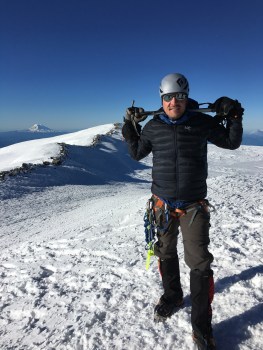
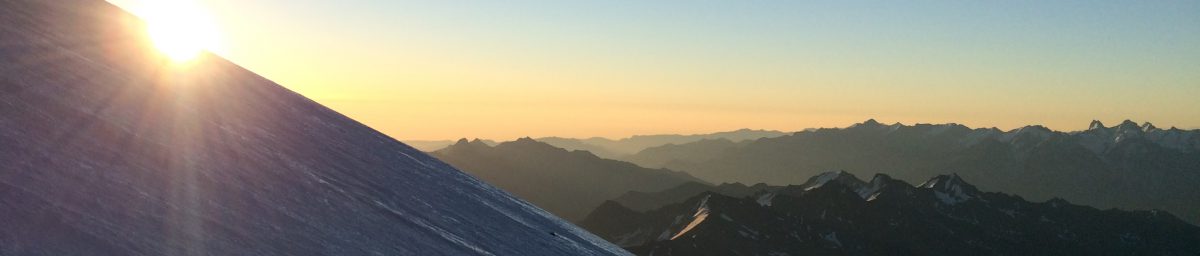


“Man, I’m glad I’m heathy and ready to go back up and take this thing on” I remember thinking. When I last published a blog, I was just finishing my recovery from a sinus infection down in Lukla getting ready to fly back to base camp to start my Camp 3 rotation. Now a week later writing this blog it’s hard to consider and account for all the emotions, pain, and effort that has transpired in such a short time.
The trip back to base camp started in a way that reminds one that the choices we make in life have consequences. And not just for ourselves. While waiting for our morning helicopter on the pad just outside our tea house, we watched one particular helicopter land with a crowd gathering immediately after it touched down. The Sherpa occupant in the rear of the aircraft seemed hesitant to get out with a look of fear and remorse on his face. Finally, with the rotors slowing to a halt, the door to the craft was opened and the man all but pulled out. The crowd kick and punched at him for a moment before the authorities could drag him away from the crowd. Moments later, several of the men who had been part of the crowd gathered on the opposite side of the helicopter in a much more somber manner. They opened the doors and gathered on both sides of a stretcher on top of which was secured a sleeping bag containing the remains of a climber who had passed away at base camp. The men accompanied the body away from the pad as the mood of those left witnessing the event took a turn for the serious.
As we later found out, this particular climber was the 85-year-old man trying to set the record for the oldest person to climb Mount Everest. He had set the record previously in his late 70s only to be topped by an 80-year-old a year or two later. The man in the back of the helicopter had been the person mostly responsible for talking him into attempting the mountain again and the crowd was mostly family and friends who had tried to talk him out of it. In their pain, they lashed out. In his shame, the man seemed resigned to whatever fate beheld him. The whole thing the result of a life decision by a person who was not longer able to justify it to the people around him. What a powerful event to behold just as we boarded our flight back to base camp.
Arriving back at 17,300’, the four of us strode powerfully from the helicopter pad back to camp. The four nights at 9,000’ seemed to have done our bodies all the good in the world. We rejoined our team for lunch and spent the afternoon trying on and working with our O2 masks, grabbing food for the rotation from the “Costco” tent, and packing our backpacks for the ensuing trip. It really shouldn’t have taken long but with nothing else to do to occupy the time we stretched even the simplest tasks to fill the afternoon.
Team 1 had just gotten down from their camp 3 rotation and looked fairly ragged as they took turns in the shower and at the cloths washing station. As so often happens, the skies clouded up and snow started to blanket the ground as the day progressed making pretty much every aspect of camp life less enjoyable. I had washed a few articles of clothing that I knew I’d want to wear after I got down from the upcoming rotation and watched them freeze on the lines strung inside my tent as the snow came down. I’m not sure why frozen socks are as entertaining as they are but for the better part of 10 minutes I enjoyed knocking them against one another or beating them against the front of a frozen shirt.
Backpack mostly packed, I went to an uneventful dinner that saw the now eight climbers and one western guide on Team 3 headed up through the icefall in the morning retire early. The Sherpa climbing crew have their own dinning and personal tent area so we typically only interact with them when it’s time to head up and down the mountain. However, you can always tell the evenings that proceed movement as the camp gets quiet very early in the evening. This evening saw most lights out by 7:30 in anticipation of at 1:30 wakeup.
I can’t remember sleeping well or ill which means I must have gotten around four hours of sleep before it was time to get up and start moving. Having laid out my layering system the night before, the cold of the night was offset by the ease of getting ready. I quickly dawned my wool under layers followed by another light, synthetic upper layer with built in hood, then synthetic softshell pants and jacket. Thick wool socks go on before the boot inserts and then the boots themselves. I usually throw on a down jacket until it’s time to start moving for a little extra warmth. A wool beanie and some type of glove round out the outfit but you have to be selective of glove use. You use your hands quite a bit at this cold hour and the loss of dexterity due to gloves or cold is very annoying (and painful) to say the least. Its always a balance of cold exposure and warmth
Now dressed, I usually throw the last few items in my back pack (layers I may have slept in, water bottles I drank from through the night, etc.) and step outside my tent. I throw on my helmet adorned with headlamp before stepping into my harness and getting it situated. It can be a bit difficult to get it synched down and out of the way of the backpack belt with all the layers underneath. However, with breakfast still to come the backpack is not a pressing worry. One final check inside the tent ensures I have everything I need for the rotation. The last thing I do before heading to breakfast is to secure my ice axe is attached to my pack.
Breakfast on these early mornings is usually very basic consisting of hot water for tea or coffee, porridge (oatmeal), and toast and fried eggs by request. Not being one who likes to hike on a full stomach at odd hours I usually have a bowl of oatmeal and some warm water or tea. I make sure my water bottles are full and add two electrolyte tablets to one. Few things taste as good as effervescent grape flavored water early in the morning.
By 2:30 we were done with breakfast, paired off with our Sherpa, and heading to the base of the icefall. The walk from camp to crampon point now taking only 35 minutes (down from 50 on our first trip), we joined the winding line of headlamps headed through the ice just after 3 AM. The cold, dry air started burning my lungs as my breathing picked up. “This feels a bit weird” I thought as the first coughing fit erupted. I use the word “fit” because it wasn’t the type of cough you get when you have a tickle or scratchy throat. This was one of the sensations that requires a complete expulsion of all air in your lungs through several hard contractions. It felt like I should be coughing something up with such an effort but everything stay where it was for the time being and I continued up the fixed lines and into the icefall.
Having just come off antibiotics for my sinus issues the day prior I felt a little more spent than I probably otherwise would have as we ascended the icy maze. The route had changed yet again and we no longer went through the area called “The Football Field”. Instead we worked our way further to climbers right before making a hard left traverse going up and down an area that marginally safer than the route down we had taken just 5 days earlier. Rejoining the old route just shy of 19,000’ we worked up and across ladders until we finally emerged at camp 1 just after 7 AM.
I was feeling a bit tired (again I blame the antibiotics) when I sat down for some food and water to refuel. I had planned to use the stove cached here to boil some snow and top off my water which was down to about .75L. Instead I was told it would take over an hour to get it set up and produce what I was looking for. I told them I had time since I knew I’d need more than what I had to make it through the Western Cwm on what was turning into a very sunny day. Five minutes later with no action being taken by anyone I could tell things were quickly turning into a pissing match. Rather than waste more time I decided to set off with what I had in hopes that I could cover ground quickly enough in the remaining shade that I may just make it to camp 2 a bit parched. This, as is turns out, was a mistake.
No more than 25 minutes after setting off from camp 1 we were already stopped to apply sunscreen and dawn glacier glasses as the sun came over the ridge. We had gained maybe 200’ of the 1,500’ between camps and maybe 1/5 of the distance. Already feeling tired I knew the next three hours were going to be brutal. We continued on at a slower pace than I had hoped to keep but there wasn’t anything I could do about it. Faster would mean working myself too hard in the heat of the day but slower meant I’d be out in it longer than I cared to be. By the time we reached the top of the wavy section and took off our crampons an hour had already passed with the temperature rising every minute. I took a quick minute to hydrate with the little water I had remaining and to eat some snacks to power myself for the remaining 1,000’ gain over about two miles. I saved about a quarter liter knowing I’d need something to sip on over the long march up the Cwm.
By the time I’d covered half the remaining distance my water situation was non-existent. I was down to my hooded layer on top which helped cut the sun a bit but, with no wind, was very hot. I started taking fistfuls of snow and shoving them under my hat and under my Buff against my jugular to keep my head cool. I also kept snow in my hands to get them very cold before then putting them on my chest and stomach to draw some of the heat away. Without those measures, I’m certain I would have passed out. As it is, they bought me time as I continued to trudge on to the 21,300’ marker. However, at some point, the cooling couldn’t make up for the lack of water and I resorted to grabbing a fistful of snow. I felt the relief as my cotton mouth and throat were suddenly quenched. Mildly reinvigorated, I kept up my slow paces as the altimeter on my wristwatch continued to climb. Little did I know this was likely the cause of much pain over the next several days.
By 11:00 we had reached the edge of the glacier and lower camp 2. With 250’ still to climb we took off our crampons and started the remaining trudge. Knowing I had long since run out of water one of my fellow climbers who had already reached camp 2 decided to fill a bottle and bring it back down for me. It was a solid move on his part. After downing almost half the bottle I straightened up and pushed on the final 10 minutes up to camp.
Arriving pretty beaten down, I slumped in one of the dining tent chairs as I drank cup after cup of warm sugar-based Tang drink. The warmth of the liquid was mildly repulsive but I was too worked to care and desperately needed to rehydrate. Lunch was served 30 minutes later as I sat in the same chair. I looked at the food on my plate as if it were made out of wood. There was no way that was going to happen. Instead I counted on the sugar in the drink for a bit of energy. The four of us who made planned and made it directly to camp 2 that day all agreed that it had been absolutely miserable crossing the Cwn in the heat of the day. The remaining 4 climbers stayed the night at camp 1
Luckily, my body rebounded fairly quickly and by midafternoon my energy levels had started coming back. I had set up my tent with all the supplies I had left there at the end of the last rotation and was working on a nap when the afternoon clouds rolled in. “Of course, it would get cloudy” I said to myself briefly as I felt the temperature outside drop. However, being mad at the weather makes about as much sense as trying to push a rope so I quickly changed my attitude and said, “at least I have the entire day off tomorrow recover.”
Were it not for the deep coughing fits I feel like I would have rested and recovered much better. As it was, my sleep was regularly interrupted as my body tried time and again to expelled the mucus sitting in my lungs. I don’t mean to be too graphic but many people readying this might wonder about a productive cough at altitude turning into HAPE (High Altitude Pulmonary Edema). This is a very serious condition in which the body starts producing fluid that fills the lungs. It leads to shortness of breath, very low oxygen saturation in the blood, and, if left untreated, absolutely will lead to death. Knowing exactly what the symptoms are for HAPE, as well as the symptoms I was experiencing, I want to assure you that I never felt like I had HAPE. As I continued to cough and finally got some of the mucus to break up I was sure that the sinus infection I had a week prior had simply made its way down into my lungs. Certainly not preferable but certainly not near as serious as it could have been.
That night and all the next day the cold, dry air continued to trigger the coughing fits. I was hopeful that whatever had settled in my lungs would be coughed up over the next 24 hours and that I’d be ready to go to camp 3 the following day. Unfortunately, things didn’t break up near as fast as I’d have thought or liked. Then things got worse. Not only would I have to deal with the cough but on the rest day at camp 2 I developed what started out as a mild GI issue. Since it was so mild at first, I thought it may have just been something I ate not agreeing with me and I chalked up my lack of appetite to the same. However, by the next morning it was clear it was probably some more sinister than food settling strangely.
Three of the four climbers who stayed at camp 1 the previous night made it to camp 2 on the “rest day”. The fourth, having battled his own issues for weeks, decided to hang up his crampons and try again another season. Six of the remaining seven were up early the next morning to take on the Lhotse face and make our way to camp 3. We were on the trail by 5 AM after a quick breakfast. We covered the remaining 800’ vertical from camp to the base of the face (bergschrund) and were quickly attaching ourselves to the fixed lines and jumaring our way up. Ok, maybe “quickly” is a relative term. But we were making pretty good time considering the altitude.
The Lhotse face rises almost a vertical mile from the east end of the Western Cwn. It varies in steepness from approximately 45 to 55 degrees in most places and is an ice sheet sometimes covered by snow (depending on the year and even day). Camp 3 is carved into this face about half way up. Lower camp 3 starts around 23,300’ and extends up to the point where IMG sets up their camp at 23,700’. Ledges craved and chipped by Sherpa house small rows of tents where everything is crammed as tightly as possible to make the most use of the space. A misstep here could lead to a 2,000’ fall down the Lhotse Face. This is almost always fatal, however, a Sherpa this year somehow managed to survive that fall against all odds. I don’t think anyone else wants to test their luck so much care is taken with each step.
Breathing long and hard between short bursts, most of the climbers had pulled into camp by noon. Most of us sat in our tents drinking water and trying to force down small amounts of food. The floors of the tents were far from level so all of us did the best we could to use extra layers under our pads to level things out. We knew most of us wouldn’t be sleeping that night so it was really more about getting as comfortable as possible. One of the Sherpa brought some hot water for the ramen soup I had brought for lunch. I was proud that I ate over half before I couldn’t stomach any more. I don’t know if it was the exertion from the day or a mild dissipation in symptoms but GI issues abated for most of the day. It wasn’t until after a small dinner consisting of an MRE pouch and some snacks that stomach matters really returned to the forefront.
The sun was down and it was almost dark when I felt the first rumblings. Everyone was already tucked away into their sleeping bags. I chose not to sleep in my down suit so I was particularly hesitant to getting out of bed. I quickly dug inside my medicine bag to find some Imodium. I don’t know why I expected it to work immediately (maybe wishful thinking, maybe altitude) but when I still had to go 20 minutes later I knew the consequences of inaction were not very pleasant at 23,700’. I unzipped my bag, worked on my down suit and told my tent mate for the night that I’d need to get passed him to get out of the tent. I don’t know if he felt sorry for me or was just being overly polite but we moved aside a bit and let me throw on my boot inserts and then my boots. I reluctantly crawled out of my tent and, being on the high side of the ledge slipped a bit as I slide down to the main ledge. I carefully made my way over to the “designated” area no more than 6 feet from the nearest tent and made use of the rainbow shaped zipper on my suit. Facing toward the slope and holding onto the rope in the “designated” area with one hand, holding the flap of my down suit as forward as I could I found out what desperation at almost 24,000’ feels like. Cold. Very Freaking Cold! Oh, and when you’re trying to use TP in the wind at that elevation the desperation drops to another level. By the time I was back in my sleeping bag 5 minutes later (after again slipping onto another tent) I was frozen and couldn’t believe it was only 8:30 PM.
The night went fairly slow but between coughing fits and pee bottle breaks I think I actually managed an hour or two’s sleep. The highlight of the earlier run was repeated once more as my GI tract let me know it didn’t like what was going on. This time things went a little more smoothly as I knew what to expect and how best to execute while staying warm. By the time the sky started to get light sometime between 4:30 and 5 AM most of us were beyond ready to descend. I ate two oatmeal packets before cramming everything in my backpack and getting dressed for the day. I must have been the most miserable that night because I was the first one ready to go the next morning.
Despite almost frozen hands from trying to get things ready and situated in the cold of the morning, my Sherpa and I started down around 6 AM. Traveling down fixed lines is a little different from going up. There are anchors built about every 100-150’ of line. Most of the descending can be done by arm rappel with two safety carabineers attached to the line. When you get to the anchor you mover one carabineer at a time from above to below the anchor so you are never unclipped from the rope. However, since most sections don’t require a full-on rappel with a figure 8 or ATC device, the consequences of letting go of the rope are still a pretty good tumble that you’d likely live to tell about but would rough you up pretty good. Also, at such high elevation, even descending takes a while as simply gripping the rope with your hands and walking downhill can take the wind out of you.
Within an hour, my Sherpa and I had descended to the base of the Lhotse Face and did an actual rappel off the bergschrund down to the floor of the Western Cwn. My GI issue was wanting to rear its head again so we set off at a quick pace for camp 2. We arrived just after 8 AM having descended in two hours what took six and a half to climb. My first order of business after arrival became my first order of business for the next 20 hours. Trip after trip to the toilet tent was interrupted by coughing, trying to get an hour of sleep at a time, and a complete lack of appetite. The coughing got so bad at one point that I tore some muscles between two of my ribs. I thought I may have broken them but a little time makes me think it wasn’t quite as serious as a break. It took a battery of Imodium tablets to slow down the train that was my GI track enough to get an hour of sleep between trips to the toilet that final night in camp 2. By the morning I was pretty worked and in quite a bit of pain. The only consolation was that the mucus in my lungs finally started to break up and come up with the coughing that final night. It must have been attached to the muscle that tore.
Finally, Friday morning arrived and it was time to head back to base camp. My appetite still pretty much shot I ate a bite of toast and headed to the toilet tent one more time before starting off on the 4,000’ descent. Starting the walk down I started thinking about the pain of the past 4 days. From the time I left camp 2 for camp 3 to the time I made it back down to base camp my guess at the number of calories ingested was about 2,500-3,000. My rough guess at the number of calories spent has got to be close to 15,000 or more. Simply put, I was exhausted, sick, and tired as I made my way down.
The upper Cwn went very quick as its simply a downhill walk without crampons and no need to attach to fixed lines (there aren’t any fixed lines here to attach to anyway). From the time I got to the first ladder and put on my crampons to the time I was passing below camp 1 was no more than 45 minutes. We were cruising despite not having put any diesel in the tanks for almost two days. The route through the icefall had changed yet again but this time it was fairly minor. We kept pushing and eventually passed everyone who had left camp before us. We were on a mission to get through the icefall as quickly as possible and for me to get to the HRA (Himalayan Rescue Association) clinic as quickly as possible (before there was a need to make brown snow). We rappelled a few times here and there but generally stayed on the feet as we made our way through the icefall for the fourth time out of six.
By the time we reached crampon point at the base of the icefall the sun had was shining bright and high. It was around 9 AM and it had taken us three hours to descend the 4,000’. I went directly to the HRA clinic where the doctor put me on a Z-pak and gave me some codeine for the rib pain. That particular antibiotic works on reparatory as well as GI so the hope is that it clears up the cough and the colon in about 3-4 days.
Making my way back to base camp I pretty much collapsed into my sleeping bag as I dropped my backpack outside the tent. I caught a quick 30 minute nap before waking up and deciding to get things organized before indulging too much. I shed the cloths I’d been wearing for 5 days drank some water, took some meds, and made my way to the dinning tent for lunch with a detour to the toilet tent (TT). Turns out my appetite hadn’t returned with the descent so I watched as everyone else ate. Fortunately, I didn’t have to watch long before I had to make another trip to the TT.
It took no convincing on my part to decide it would be best to head back down valley for a few days to recover in the thicker air. Another guy, whom I shared a tent with at camp 3, had the same thought. However, we had a little trouble finding a third person to split the expense of the helicopter. When dinner and the weather report for the next week came that evening things changed a bit. The route to the summit hasn’t been finished yet and it will still take a solid day’s work to get there. However, the winds up high are supposed to go from bad to worse and stay that way until around the 20th of May. Since no one is going up until that is done a few people decided that maybe four to five nights away from base camp might not be so bad. We found a 3rd and booked the flight for the following morning.
With antibiotics, some codeine, and Imodium that night at base camp wasn’t completely awful. It snowed more than usual that afternoon and night so our flight was much anticipated by the time it arrived. Only descending to Namche this time, the flight lasted about 10 minutes. Even doing that same route every time, I don’t think you’d get tired of flying in this valley for several seasons. Its unbelievably scenic. We were met at the pad by the owner of the Khumbu Lodge where we stayed when we trekked through Namche over a month ago. He was just as accommodating as the last time and made us feel at home the second we walked into his tea house. We all got rooms with attached bathrooms for obvious reasons and joined the guys who had flown down the previous day for lunch.
The past 24 hours have seen a good improvement in strength, appetite, and health. The meds and extra air seem to be doing their work. On this trajectory, I should be healed up and ready to return to base camp for a summit shot in 3-4 days. We get word every night on the long-range forecast and climbing plan which still aligns with a summit shot around our scheduled date of May 23. With four days here and four days working to the top it’s looking like we will have around two more days at base camp when we fly back up.
—-
That catches me up on most things from the past week. It’s been long, it’s been painful, and now its over. I’m recovering well and have every hope and expectation of being in a position to make a summit shot in the very near future. As always, I appreciate all your kind words and thoughts over the past month and a half. Rather than carrying them as weight and pressure they have truly been lifting. I’ve heard from several close friends and family how this journey is getting shared beyond anything I thought conceivable. It’s both humbling and inspiring to know how small our world really is and how something as abstract as a climb can encourage and excite people beyond the circles we keep. As this trip heads toward its conclusion please feel free to share, reach out directly to me, or just enjoy watching the tracking feed as I head up the mountain one last time.
Cheers,
-Wes

 Up with Wes
WOW. That’s all I have really. WOW. I’m hoping the wind improves (both the mountain’s, and yours 😜). Stay strong and safe my friend. Much love x
LikeLiked by 1 person
Thanks buddy, looking forward to trading stories when I’m in London in early august!
LikeLike
I will clear my (already empty) diary! Beers o’clock, August. That’s a date.
LikeLike
Hi Wes,
What an amazing and inspirational journey you are on! Your writings and photos about all your experiences are so descriptive that I feel almost like I am there with you (not that I would actually WANT to be there if the truth be told). I have been sharing your blogs and information from the IMG website with family members and lots of my friends (most of whom you have never met), and they, in turn, are sharing them with lots of their friends and family. Many of them have let me know how much they are enjoying following your experiences on Everest and learning about many aspects of mountaineering that they had no knowledge about. I had previously told all of them about the 85 year old climber’s plans to regain the title of the oldest Everest climber and then I told them about his death, so when they read your description of the dramatic scene you witnessed at Lukla when his body was returned, it will have a very special meaning to them. Wes, Mary Ellen and I are sending prayers and well wishes to you and the other climbers as you rest up and heal up for the next, and last, climb up Everest. We wish you health and safety and success on your summit bid… but whether you eventually gain the summit or not, know that your efforts and those of all the other climbers are making a profound impact on many, many people who are following and learning from your adventures. Stay safe up there, Wes! We love ya and look forward to talking with you upon your return!!
Chuck
LikeLiked by 1 person
Thanks for the kind words Chuck! I’m looking forward to sharing some stories around the fire pit when I get back.
LikeLike
Wes,
Thank you for keeping us updated with your adventures. It has been incredibly inspiring to read your progress over the last couple of weeks. I wish you all the best in your coming attempt on the summit. The brewery opens on May 20th here in Denver, and while that’s incredibly exciting and thrilling to be at this point, we’re working so long and hard it’s difficult to find time to look up towards the mountains. It has been a pleasure to live vicariously through you! So glad you’re on the path to recovery. All your fellow climbers here in Denver are rooting for you and looking forward to toasting you next time you’re in town. Feel better friend, and best of luck in the coming days!! Be safe up there on the roof of the world!
Andrew
LikeLiked by 1 person
Andrew,
Thanks for the kind words and encouragement! Glad I could provide a mountain outlet for you as you get ready to share your craft with the world. Good luck with the opening; I can’t wait to get out to CO and try it for myself!
-Wes
LikeLike
Thanks for yet another update! Glad you’re feeling better and able to continue this exciting journey! Wishing you the best and safe travels.
LikeLiked by 1 person
Thanks Jan!
LikeLike
I promise I will never ever again take for granted the convenience of using indoor, climate-controlled, plumbing!! Rest well, son.
LikeLike
You are incredible!! So glad to hear your health is finally starting to come back around! So exciting that you will be on your way to the submit so soon! Keep up the incredible work!!!!
LikeLike